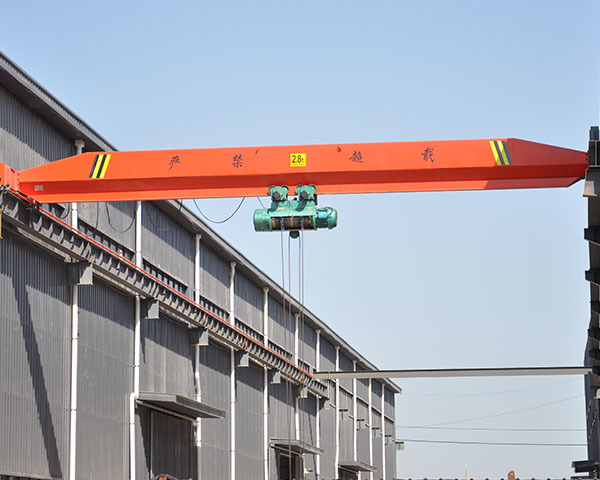
PLC-based control systems have transformed the way industrial cranes operate on the factory floor. If you've worked with ladder logic or automation projects before, integrating a PLC with a single girder overhead crane is a natural next step — one that brings precise motion control, safety interlock logic, and IoT-ready data logging to one of the most common pieces of industrial lifting equipment. In this guide, we'll walk through the full picture: from the mechanical fundamentals of single girder overhead cranes, to PLC I/O wiring, ladder logic programming, VFD integration, and real-world automation patterns used in manufacturing environments. What Is a Single Girder Overhead Crane? A single girder overhead crane (also called a single beam crane) consists of one main horizontal beam — the ...
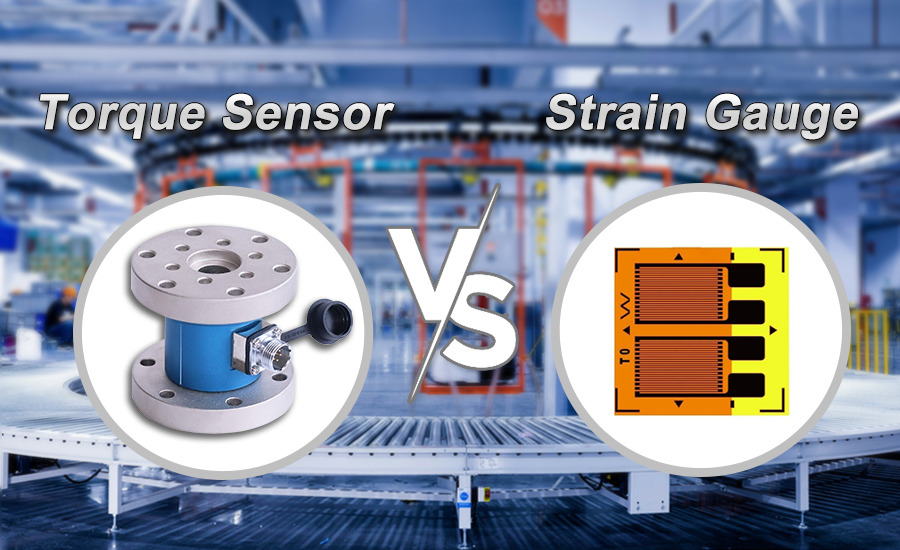
I still remember the first time I had to choose between a strain gauge and a torque sensor. It was a cramped motor lab. Old bench. Coffee gone cold. The project manager wanted answers by Friday. On paper the choice looked simple. In the real world it never is. Every project has its own personality. Speed. Budget. Accuracy. Abuse level. And usually a deadline that doesn’t care about any of that. If you have spent time around test stands and factory motors you know this dilemma well. Torque measurement sounds straightforward until you actually have to do it. That is when questions start piling up. How accurate do we really need to be. Will this thing survive vibration. Can we install it without tearing the whole setup apart. And the big one. Will it still read the same after six months of he ...
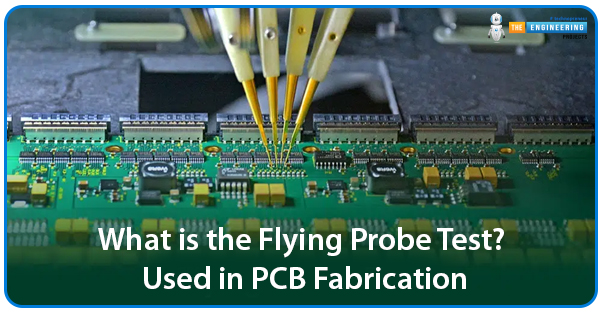
Hi readers! I hope you are well and finding some thrilling advancement. In the high-speed electronic world where accuracy cannot be compromised and error is unthinkable, the Flying Probe Test is the unsung hero of PCB integrity. Today, the topic of our discourse is the Flying Probe Test and its use in PCB Fabrication. In the complex realm of contemporary electronics, the dependability of a printed circuit board (PCB) can either make or destroy a product. With devices shrinking in size, speeding up in performance, and becoming increasingly feature-dense, the need for unflinching quality and accuracy in PCB manufacturing has grown stronger. Getting each trace, via, and connection perfectly manufactured is no longer a choice; it's a necessity. That's where Flying Probe Testing (FPT) comes in ...
Hi readers! Hopefully, you are well and exploring technology daily. Today, the topic of our discourse is the MLX91218 and MLX91219 3.3V/5V sensors with high-accuracy simplify inverter/converter control and battery management. You might already know about it or something new and different. The Melexis MLX91218 and MLX91219 are magnetic field sensors that are of very high accuracy and are used in applications such as inverter/converter control and BMS. They possess an excellent quality level of accuracy in magnetic field sensing while consuming low power. They are, therefore, one of the best choices for modern electronic applications such as electric vehicles, industrial automation, renewable energy systems, and consumer electronics. The 3.3V or 5V wide range of voltage supply offers broad c ...
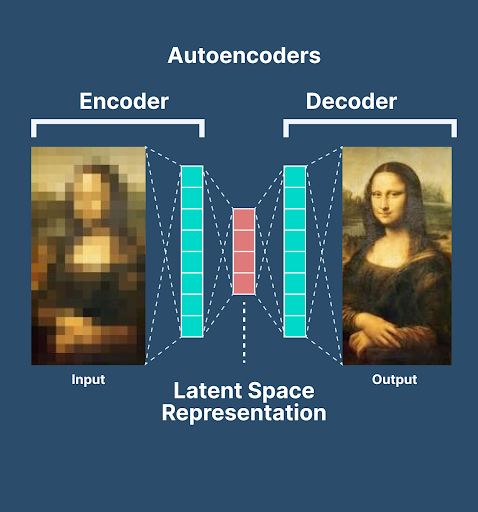
Hey readers! Welcome to the next episode of training on neural networks. We have been studying multiple modern neural networks and today we’ll talk about autoencoders. Along with data compression and feature extraction, autoencoders are extensively used in different fields. Today, we’ll understand the multiple features of these neural networks to understand their importance. In this tutorial, we’ll start learning with the introduction of autoencoders. After that, we’ll go through the basic concept to understand the features of autoencoders. We’ll also see the step by step by step process of autoencoders and in the end, we’ll see the model types of autoencoders. Let’s rush towards the first topic: What are Autoencoders? Autoencoders are the type of neural networks that are used to learn the ...
Hello learners! Welcome to the next episode of Neural Networks. Today, we are learning about a neural network architecture named Vision Transformer, or ViT. It is specially designed for image classification. Neural networks have been the trending topic in deep learning in the last decade and it seems that the studies and application of these networks are going to continue because they are now used even in daily life. The role of neural network architecture in this regard is important. In this session, we will start our study with the introduction of the Vision Transformer. We’ll see how it works and for this, we’ll see the step-by-step introduction of each point about the vision transformer. After that, we’ll move towards the difference between ViT and CNN and in the end, we’ll discuss the ...
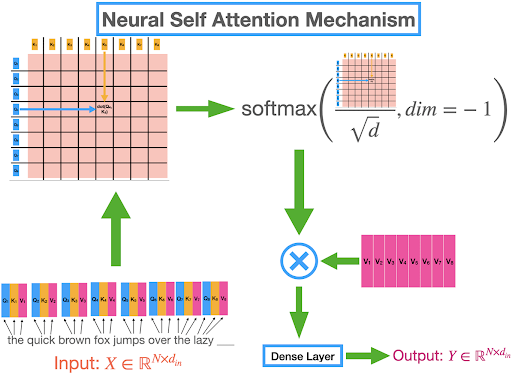
Deep learning is an important subfield of artificial intelligence and we have been working on the modern neural network in our previous tutorials. Today, we are learning the transformer architecture neural network in deep learning. These neural networks have been gaining popularity because they have been used in multiple fields of artificial intelligence and related applications. In this article, we will discuss the basic introduction of TNNs and will learn about the encoder and decoders in the structure of TNNs. After that, we will see some important features and applications of this neural network. So let’s get started. What are Transformer Neural Networks Transformer neural networks (TNNs) were first introduced in 2017. Vaswani et al. have presented this neural network in a paper titled ...
Welcome to the next tutorial of our raspberry pi 4 programming course. The last guide covered connecting a Sharp infrared distance measurement sensor to a Raspberry Pi 4. Infrared (IR) sensors were demonstrated to be widely used for nearby object recognition and motion tracking. But in this session, we'll utilize Raspberry Pi 4 to create a radio-frequency (RF) remote control that can be used to operate the gadgets wirelessly. With the help of this RF remote control, we can Power On/Off the devices. Components Transmitter Side RF Transmitter HT12E IC 4 Push Buttons 750k resistor 9 Volt battery Receiver Side Raspberry Pi 16x2 LCD 10K POT Breadboard 1K Resistor (Five) 33K resistor HT12D IC RF Receiver LEDs (Five) 4 10K resistor Jumper wires RF Module This ASK Hybrid Transmitter/Receiver modul ...
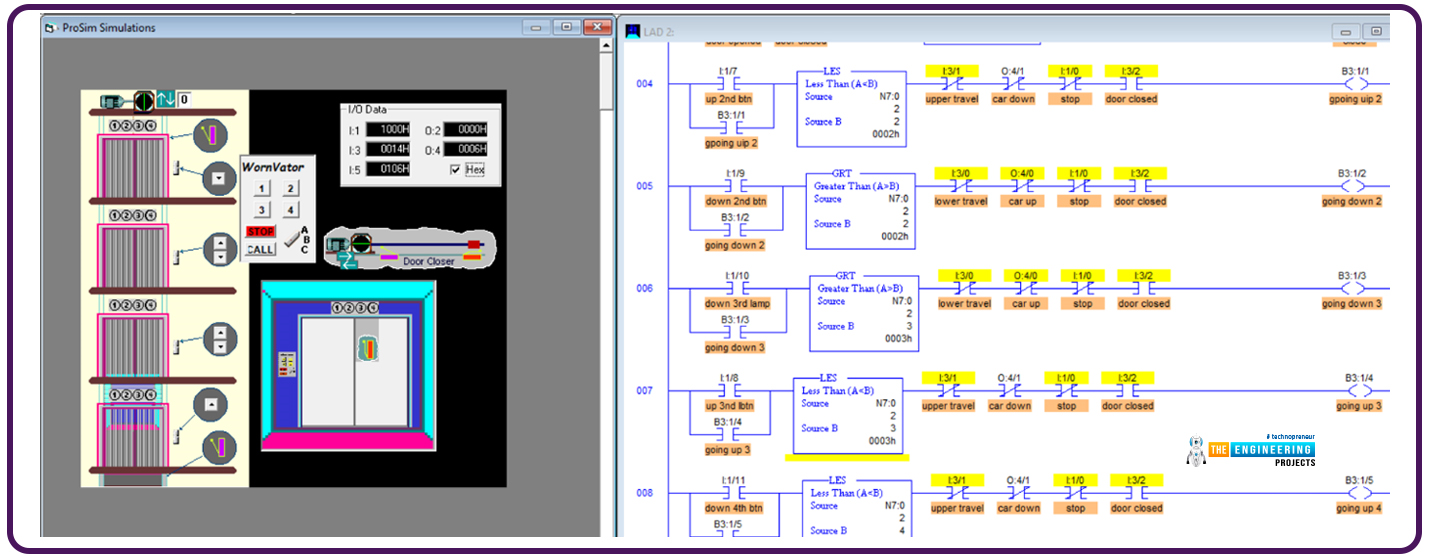
Hi, my friends and welcome back. I am happy to meet you again with a new tutorial of our PLC ladder logic programming series tutorials. Today we will complete what we started the last tutorial on the Elevator control project. We have a bunch of duties to complete together today. So let’s save time and jump into work immediately. Project description: Figure one shows the details that might help me describe the project between our hands. We have an elevator car that travels up and down and can stop on one of four floors based on the passengers’ requests. We have 6 push buttons on the wall next to the elevator door that can send requests to call the elevator. In addition, there is a control panel inside the elevator cabinet in which there are push buttons to request stations to reach floors 1 ...
Hello, my friends and welcome back with one new tutorial of our ladder logic programming series. Today I am bringing one exciting project which you can see everywhere, in your home, work, and public places, which is an elevator. We will design a solution using plc ladder logic programming, which drives the elevator. Our elevator is composed of 4 floors and has all capabilities of large-scale elevators. So let’s get started and save time and jump into our tutorial. Elevator Project As you can see, Everyone figure 1 depicts the complete scene of the project and tells that the elevator we will manage has four floors to visit. On the first floor, there is only one outer request to call the car from any floor above, i.e. from floor 2, floor 3, or floor 4. While on the second floor, there are tw ...