Hey Guys! We welcome you on board. Technology evolves every day with the addition of advanced components and devices that make our lives easy. A few years back we were dependent on end-to-end wiring and connectors to electrically connect different electronic components. The inception of PCB substantially removed the need of an end to end wiring and gave an entirely new look to the electronic industry.
In this article, I'll give you a detailed Introduction to Aluminum PCB. It is a type of PCB that uses dielectric thermally conductive and electrically insulated material between the copper layer and aluminum metal. This PCB is a highly effective choice for applications that involve heat dissipation or high temperature. You must have a quick look at M ...
Hello everyone. Today is a great day that we are going to put our focus on another type of PCB. So far in the previous articles, we have looked at high speed, metalcore, high density interconnect and the ceramic types of PCBs. In this article, we are going to introduce another type of PCB that might find great use in your day-to-day interaction with the printed circuit boards. it is very important for a designer to take note of how PCBs have evolved and how they have become an important aspect in the design of successful electronic devices. It has become hardly difficult to come across any time of an electronic device that does not involve the use of printed circuit boards.
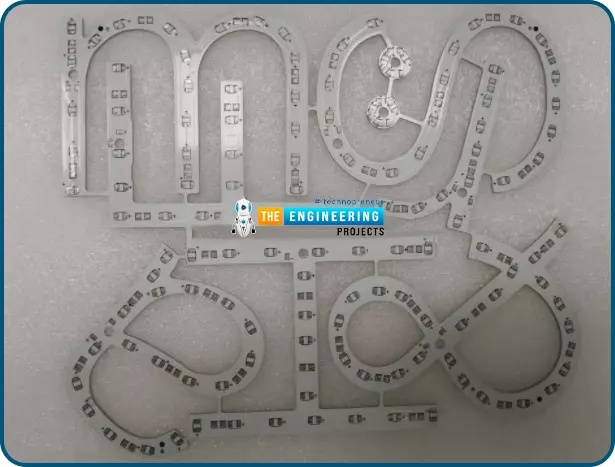
In PCB boards you come across LEDs fixed in them, and due to the evolving w ...
Hello everyone and welcome to this article. Previously we have been discussing different types of PCB boards and for sure we have not exhausted everything. Today we are going to focus on a very important aspect of the PCB design which is the thermal characteristics of the PCB's working environment. Up to this moment, we have interacted with boards that work best in normal working conditions. But remember there are some working conditions, that have very harsh environment such as high temperatures. Let us take for example temperature in boilers or even electric heaters. Do you think normal FR-4 boards can survive in such temperatures? Don’t you think they will melt off if exposed to high thermal radiation? Your guess is as good as mine. For us to h ...
Printed circuit board is a very important part of electronic devices. You will find them in all electronic appliances. To make a good quality PCB, it is very important to select high-grade materials. A PCB mainly consists of a NON-conductive material. Conductive lines are etched or printed on them.
PCB materials are mainly of 3 types.
FR-4TeflonMetal
Among these 3, FR-4 is the most common. This article will discuss all that you need to know about FR4 PCB Fabrication. We will discuss all about FR4. We will focus on its advantages.FR-4 Manufacturing
PCBway Fabricaton House manufactures high-quality FR4 PCBs. They can produce these PCBs really fast. The cost is also optimum. They are capable of making multi-layered FR4 PCBs.
PCBWay Fabrication H ...
Wave soldering is a widely used mass soldering process in the manufacturing of electronics, especially for through-hole elements and intricate technology printed circuit boards. In this method, a PCB is ignored, and a wave of melted solder permits solder joints to form on vulnerable part leads and pads at the same time. While wave soldering is effective and cost-efficient for high-volume manufacture, it is also liable to certain flaws if the method parameters, textiles, or patterns deliberation are not handled carefully.
Wave soldering defects in PCB assembly refer to general soldering flaws, such as spanning, defective solder, voids, and cold joints, that happen during the wave soldering process and can negatively affect the electrical execution, reliability, and long-term endurance of p ...
Hi, I hope you all are doing great. Today we are talking about the silkscreen on the printed circuit boards (PCBs). We know that PCBs are the essential parts of electronic devices, and there are a variety of PCBs for different circuits. Generally, silkscreening is the process of surface printing with the help of a design cut out on a sheet. But, we are particularly talking about the silkscreen on the PCB. It is a crucial step in the PCB design and plays a role during the PCB assembly to make sure the PCB is designed well. Generally, silkscreen is used to provide basic information about the components on the PCBs. This article has a silkscreen introduction, types, and methods.
Introduction to PCB Silkscreen
The PCB Silkscreen is a layer of non-electric permanent epoxy ink present in the f ...
Hi Friends! I welcome you on board. Happy to see you around. In this post today, I’ll document a detailed guide on the PCB manufacturing process.
PCB is hands down a crucial part of modern electronics. From cell phones and digital clocks to remote control and television sets, you will find inside a printed circuit board that connects the electrical components through sophisticated layers of copper traces. These electrical copper traces help in the flow of current through the connected components.
Needless to say, PCB has revolutionized the electronics industry. You’ll never find bulky electronics incorporated with scores of wires and electrical components. Nowadays, electronic devices are more compact and sophisticated, cover less space, and ...
Hi readers! I hope you are having a great day and finding something new to learn. Today, the topic of our discourse is PCB Castellation and Castellated Holes.
Printed Circuit Boards (PCBs) are the core of nearly all electronic devices and are a structured platform on which components are mounted and interconnected. As electronics are moving toward more miniaturization, modularization, and mass production, PCB technologies must advance to be able to support these new requirements. Part of this advancement is the use of PCB castellations or castellated holes, a technology that supports small, modular board-to-board connections.
Castellated holes are tiny, plated half-holes on the border of a PCB. They allow one PCB, a module, or daughterboard, to be soldered onto another directly, much lik ...
Hey there, I hope you are having a good day. Printed circuit boards (PCBs) are a popular topic in the electronic world and we also know that PCBs have revolutionized circuits. They not only provide a solid base but the material used in the PCBs helps the circuit to function properly by protecting the circuit from factors like external radiation. These are present in different materials that divide the working, stability, and reliability of the circuit. In recent years, there has been a significant change in the types and strength of PCBs and this depends on the materials used in the manufacturing of these boards. We are interested in studying the advanced materials used in the manufacturing of PCBs and knowing the right type of material for the right circuit.
...
Hi, tech folks! Hope you're having a good day and reading about something fun and informative. Beneath every stylish device is a hard decision between wave soldering and reflow. Today, we will discuss it in detail.
In the rapidly developing electronics manufacturing universe, choosing between soldering approaches is the turning point for deciding the reliability, efficiency, and cost-effectiveness of printed circuit board (PCB) assembly. As parts continue to miniaturize, complexity increases, and there are requirements for ever-smaller miniaturized yet high-performance components, the designer must carefully choose the most effective soldering method. Among existing processes, the two universally popular processes widely employed, specific to specific processes and design applications, ar ...