Hello everyone and welcome to this article. Previously we have been discussing different types of PCB boards and for sure we have not exhausted everything. Today we are going to focus on a very important aspect of the PCB design which is the thermal characteristics of the PCB's working environment. Up to this moment, we have interacted with boards that work best in normal working conditions. But remember there are some working conditions, that have very harsh environment such as high temperatures. Let us take for example temperature in boilers or even electric heaters. Do you think normal FR-4 boards can survive in such temperatures? Don’t you think they will melt off if exposed to high thermal radiation? Your guess is as good as mine. For us to h ...
Hi Geeks, welcome to our new project. Our new project is one of the most common issues you’ve seen in your cities. In this project, we are going to make a car parking system with automatic billing. In the entire world, there are an estimated 1.4 billion cars on the road, which is absolutely great news if we are considering the development of the Automobile industry. But the most serious issue is that the number of cars exceeds the number of available parking places, resulting in traffic congestion. Damaged cars due to this lack of space, fewer parking locations, lack of parking signage, informal parking, and overcharging for parking are just a few of the issues.
People are still choosing manual parking methods, which have a number of drawbacks, suc ...
Hello friends, I hope you are doing very well! In today's tutorial, we will set up a simulation environment for Ladder Logic Programming. It's our second tutorial in Ladder Logic Programming Series. In our previous tutorial, we have seen a detailed Introduction to Ladder Logic Programming and we have seen that this programming language is used for PLC controllers.
As PLC is an Industrial Controller, it comes with built-in relays/transistors(with protection circuitry) and thus is quite expensive as compared to microcontrollers/microprocessors i.e. Arduino, Raspberry Pi etc. Moreover, if you are working on a real PLC, you need to do some wiring in order to operate it. So, in order to avoid these PLC issues at the beginning, instead of buying a PLC o ...
Hello readers, I hope you all are doing great. Welcome to Section 5 of the ESP32 Programming Series. In this section, we are going to interface different Embedded Sensors with the ESP32 Microcontroller Board. ESP32 development board is featured with some inbuilt sensors(i.e. hall effect sensor, capacitive touch sensor) so, in the initial tutorials of this section, we will explore these built-in ESP32 sensors and in the later lectures, we will interface third-party sensors with the ESP32.
In today's lecture, we will discuss the working/operation of the ESP32 built-in Hall Effect Sensor. Hall Effect sensor is used to detect the variation in the magnetic field of its surroundings. So, let's first understand What's Hall Effect:
What is the Hall Effect?
The Hall Effect phenomenon was fir ...
Hello everyone. Today is a great day that we are going to put our focus on another type of PCB. So far in the previous articles, we have looked at high speed, metalcore, high density interconnect and the ceramic types of PCBs. In this article, we are going to introduce another type of PCB that might find great use in your day-to-day interaction with the printed circuit boards. it is very important for a designer to take note of how PCBs have evolved and how they have become an important aspect in the design of successful electronic devices. It has become hardly difficult to come across any time of an electronic device that does not involve the use of printed circuit boards.
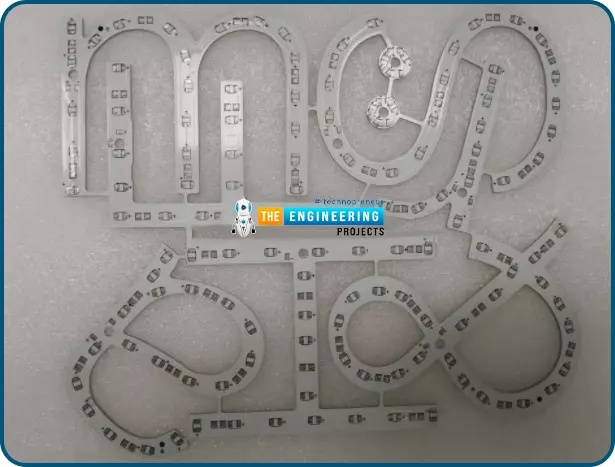
In PCB boards you come across LEDs fixed in them, and due to the evolving w ...
Hello readers, I hope you are all doing great. Welcome to the 2nd lecture of Section 5(ESP32 Sensors) in the ESP32 Programming Series. In the previous tutorial, we discussed the built-in ESP32 Hall Effect Sensor. In this tutorial, we will discuss another inbuilt sensor of the ESP32 i.e. Capacitive Touch Sensor.
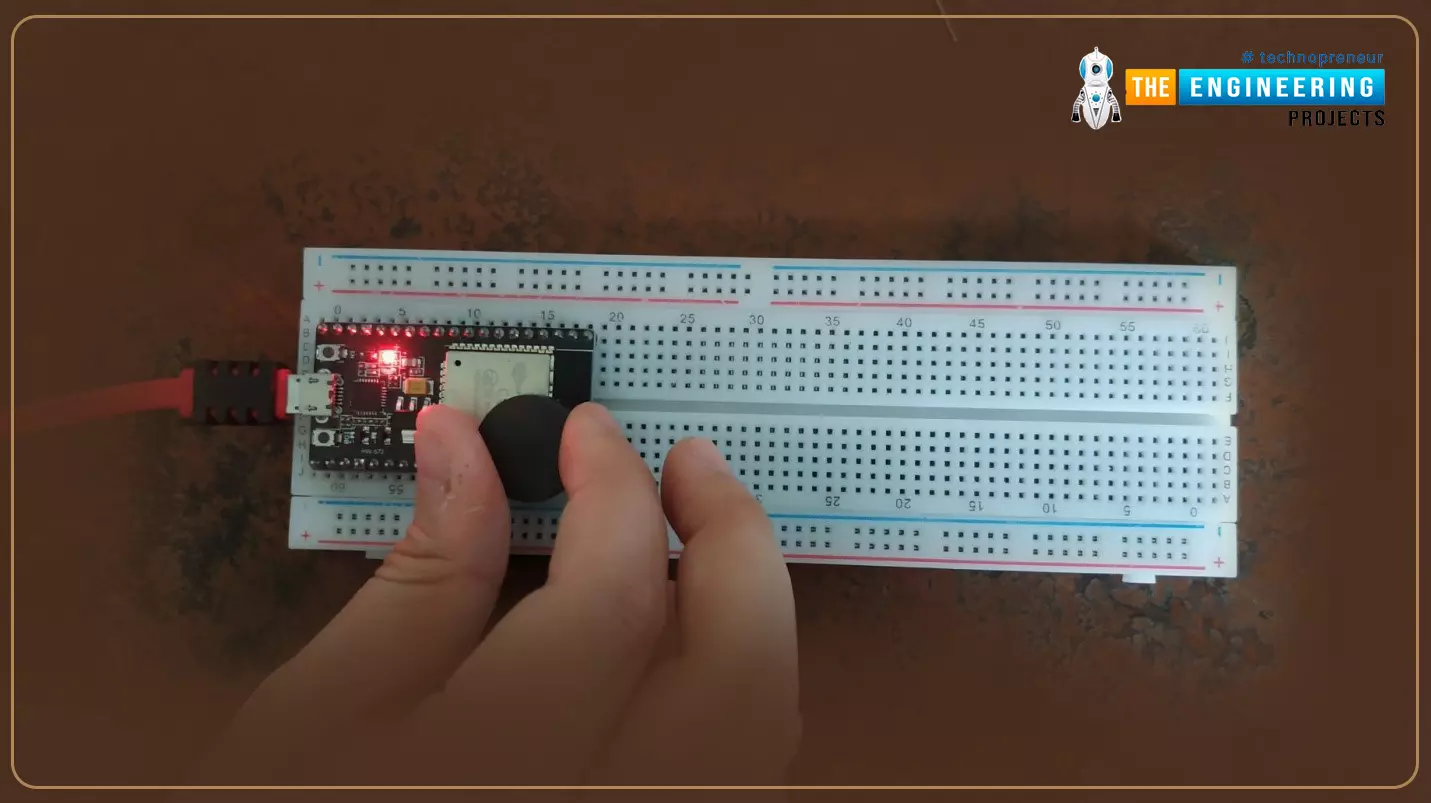
ESP32 Board has 10 built-in capacitive touch pins, which generate an electrical signal when someone touches these pins. These ESP32 touch pins are normally used to wake up the board from deep sleep mode. These touch pins are also used to replace the normal mechanical buttons with touch pads, improving the presentation of the IoT projects.
Here's the video demonstration of the ESP32 Capacitive Touch Sensor:
Before going forward, let's first understand how this touch sens ...
Hello readers, hope you all are doing great. In this tutorial, we are going to discuss a mechanism that allows users to update the ESP32 with a new program wirelessly or over the air (without using a USB cable to upload a new program).
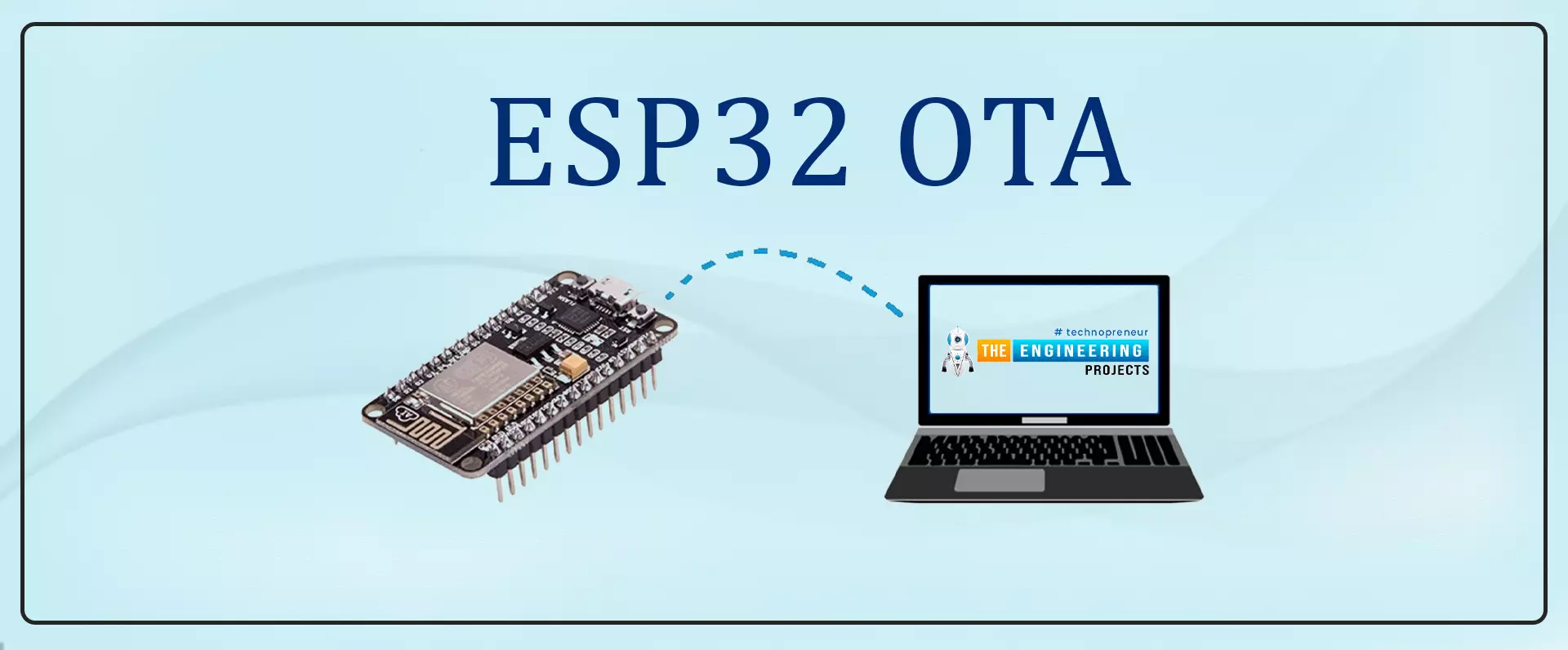
Over-The-Air (OTA) programming
Fig. 1 ESP32 OTA
OTA programming is the mean by which a product manufacturer or product service provider can update the features or functionality of the device wirelessly or over the air, after the device has been deployed in the field where connecting a cable or uploading the code serially is difficult.
One key advantage of OTA is that a single central node can send an update to multiple ESPs on the same network.
The device must have a provisioning client capable of receivin ...
In our previous article, we grasp knowledge about real-life examples of the Internet of things. Now in this article, we try to elaborate on real-life applications of the Internet of things. Now a question may arise in your mind what’s the difference between the application of the Internet of things and examples of the Internet of things. I would be happy if you may elaborate on your question in addition. Simply associate degree example shows how applications are also created. Like there are several functionalities on the market in terms of arthropod genus and strategies however with examples it might be additional clear. Even so these functionalities are also wont to produce one thing awe-inspiring. In short, examples of the Internet of things is a task that is performed to develop a skil ...
If you want to monitor the utility usage in real-time and if you want to optimize the business utilities, you should make use of the energy monitoring system. It is the software that monitors the utility consumption online like the energy, fluids, gas, and so on. This system helps to calculate the consumption per area like the departments and production lines. It also helps in calculating the consumption per the production like the orders and the items that further helps in calculating the real production cost. With the help of the best type of energy monitoring tool, you can forecast the energy usage in several sectors and then create the alarm if it finds that the site has reached the contractual capacity.
The energy management system will furth ...
Choosing a prototyping firm to manufacture your things is a crucial decision. Identifying the right match is a difficult task for any firm. Cost, effectiveness, dependability, and operational processes must all be considered before assigning any production assets.
Dealing with a prototyping firm should be straightforward once you learn what to look for. The following are important considerations to consider while looking for a producer to help you bring your prototype idea to life.
Familiarity with the Business
You can look through the portfolios of the best prototyping businesses to see their previous work. This data is crucial in determining whether they have experience with similar initiatives and specialize in your required prototypes.
You'l ...