


Project Files of XIAO nRF52840 Sense Library for Proteus: Bluetooth, IMU, Fall Alarm
 Libraries
 Code
 Projects
 Simulation
xiao-nrf52840-sense-tep-v1-0-2cee8c4f6b274eee80e8e17a2aa89ec9.zip
XIAO nRF52840 Sense Library for Proteus V1.0
XIAO nRF52840 Sense Library for Proteus V1.0 comes as a ZIP archive of 266 files (3.5 MB, 7.8 MB unpacked) holding Proteus library files, simulation model DLLs, a Proteus simulation, an Arduino sketch, an Arduino library, compiled HEX firmware and source code.
- LIBProteus library
- DLLProteus model
- DSNProteus simulation
- INOArduino sketch
- LIBArduino library
- HEXHEX firmware
- SRCSource code
Description
XIAO-nRF52840-Sense-Library-for-Proteus-v1.0.zip with the XIAO nRF52840 Sense in Proteus (your sketch with the board's pin numbers, Bluetooth LE to a phone, the LSM6DS3 motion sensor, a Sensors window and a serial monitor; TEPXIAOBLE.LIB, TEPNET.DLL and the TEP Boards for Proteus add-on 1.56.0), the OLED and Wi-Fi monitor libraries, the fall alarm demo with its sketch and a README.

File Structure
 File Structure
1.1 KB7.7 KB11 KB8.5 KB1.5 KB1.7 KB1.9 KB5.7 KB4.9 KB1.1 KB5.8 KB9.6 KB7.2 KB2.5 KB2.1 KB1.9 KB2.1 KB4.4 KB1.1 KB3 KB3 KB1.8 KB2.5 KB3.5 KB149 B2.7 KB2 KB6.4 KB3.2 KB1.3 KB963 B8.6 KB5.9 KB6 KB12 KB1.6 KB1.3 KB14.7 KB4.3 KB6.1 KB20.1 KB8.2 KB2 KB4.5 KB311 B12.8 KB6.7 KB6.1 KB2.2 KB3.4 KB5.9 KB1.5 KB1.6 KB16.6 KB9.7 KB6.9 KB2.1 KB533 B5.7 KB7.4 KB514 B1.7 KB896 B481 B1.4 KB1012 B482 B936 B559 B467 B3.6 KB3.8 KB504 B956 B575 B455 B8.3 KB10.9 KB522 B918 B1.4 KB1.8 KB1 KB1.3 KB1.4 KB1.8 KB1.4 KB5.7 KB502 B463 B5 KB6.5 KB3.4 KB3.4 KB500 B1.6 KB368 B406 B466 B404 B444 B460 B477 B739 B448 B1.3 KB350 B5.7 KB4 KB562 B1.5 KB2 KB550 B7.2 KB4.1 KB371 B4.5 KB3.5 KB492 B390 B478 B6.6 KB2.4 KB479 B2.2 KB1.9 KB498 B1.2 KB1.2 KB487 B5.1 KB4.6 KB371 B1.5 KB1.2 KB478 B6.2 KB3 KB1.5 KB1.7 KB469 B1 KB1.7 KB433 B294 B358 B1.3 KB2.5 KB13.2 KB3.8 KB659 B510 B4.4 KB1.9 KB5.8 KB11 KB835 B518 B9.2 KB4.9 KB439 B4.2 KB1.5 KB9.3 KB7.1 KB4.7 KB2.4 KB388 B5.1 KB893 B667 B1.3 KB5.5 KB2.3 KB1.8 KB468 B882 B530 B791 B487 B894 B2 KB730 B646 B2.6 KB977 B702 B20.6 KB1.8 KB11.8 KB3.2 KB596 B406 B6.3 KB5.7 KB9.3 KB7.7 KB7.7 KB5.8 KB5.9 KB6.4 KB6.4 KB5.3 KB5.6 KB5.7 KB7.9 KB7.7 KB6.5 KB6.3 KB6.2 KB10.3 KB8.5 KB6.6 KB7.6 KB6.7 KB6.1 KB6.7 KB8.3 KB6.2 KB7.2 KB5.9 KB5.6 KB5.7 KB6.7 KB5.9 KB6.2 KB6 KB6 KB6.1 KB6.3 KB6 KB6.2 KB6 KB5.8 KB7 KB6.5 KB6.6 KB6.5 KB7.5 KB7.7 KB7.1 KB5.8 KB5.9 KB5.9 KB6.9 KB5.5 KB5.5 KB7.1 KB5.2 KB27.7 KB25.9 KB1.3 KB8.5 KB33.8 KB7.8 KB39.5 KB13.1 KB112.4 KB24.5 KB2.9 MB323 KB2.9 MB323 KB17.7 KB73.7 KB12.1 KBGallery12 images from the tutorialOpen the tutorial
 Gallery12 images from the tutorial
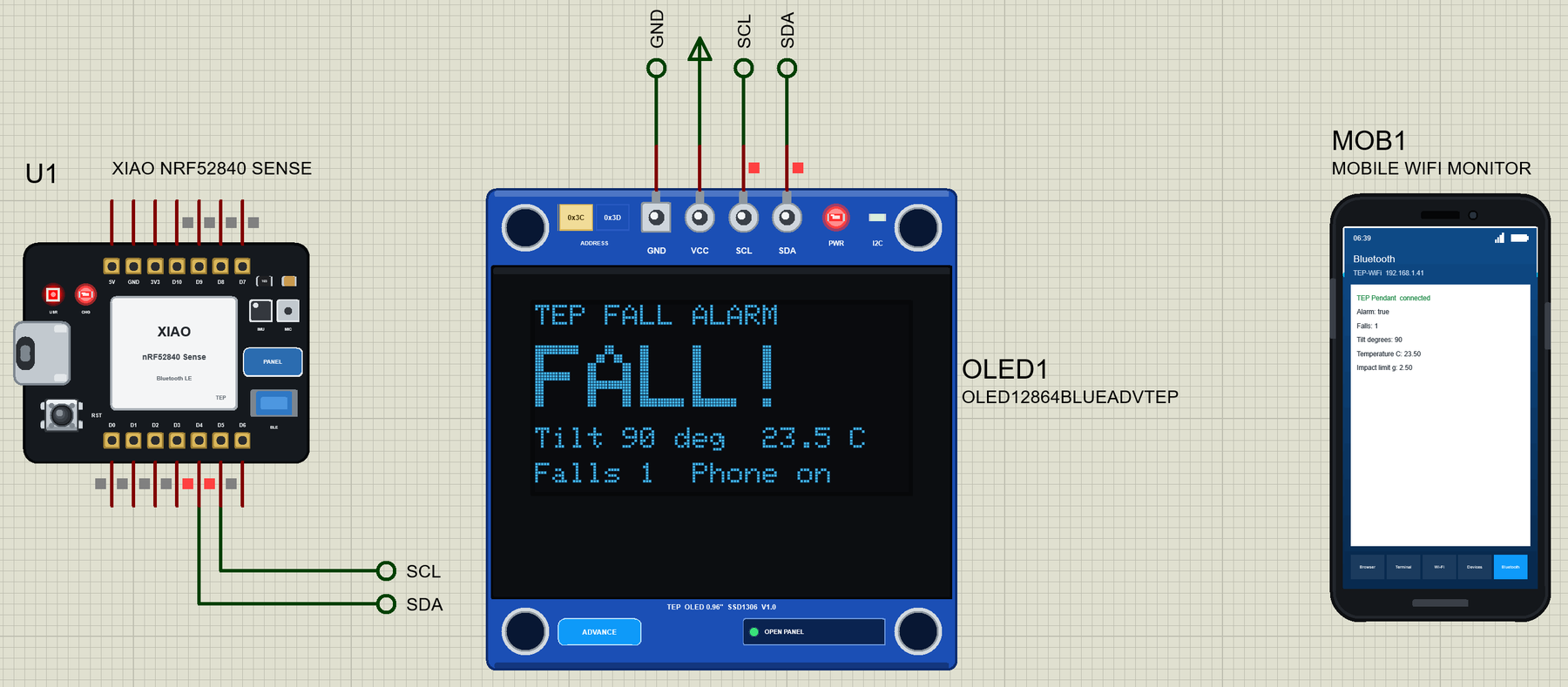
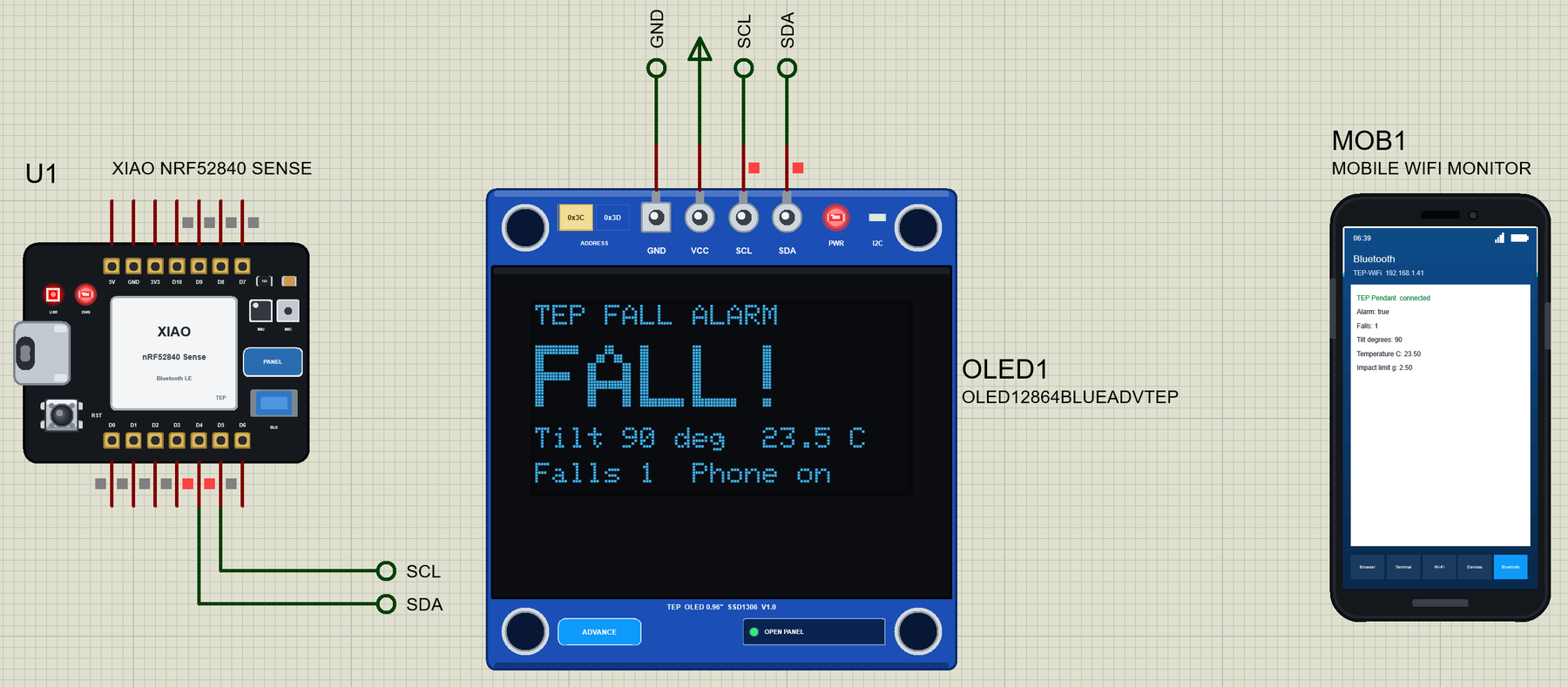
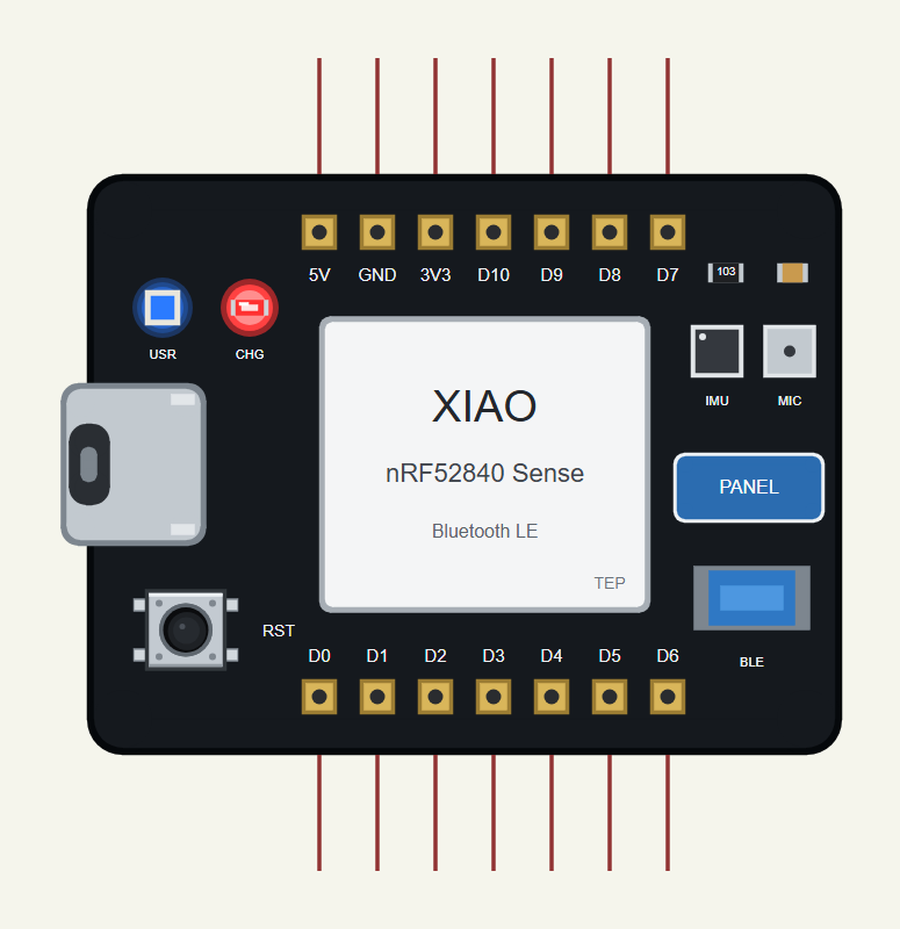
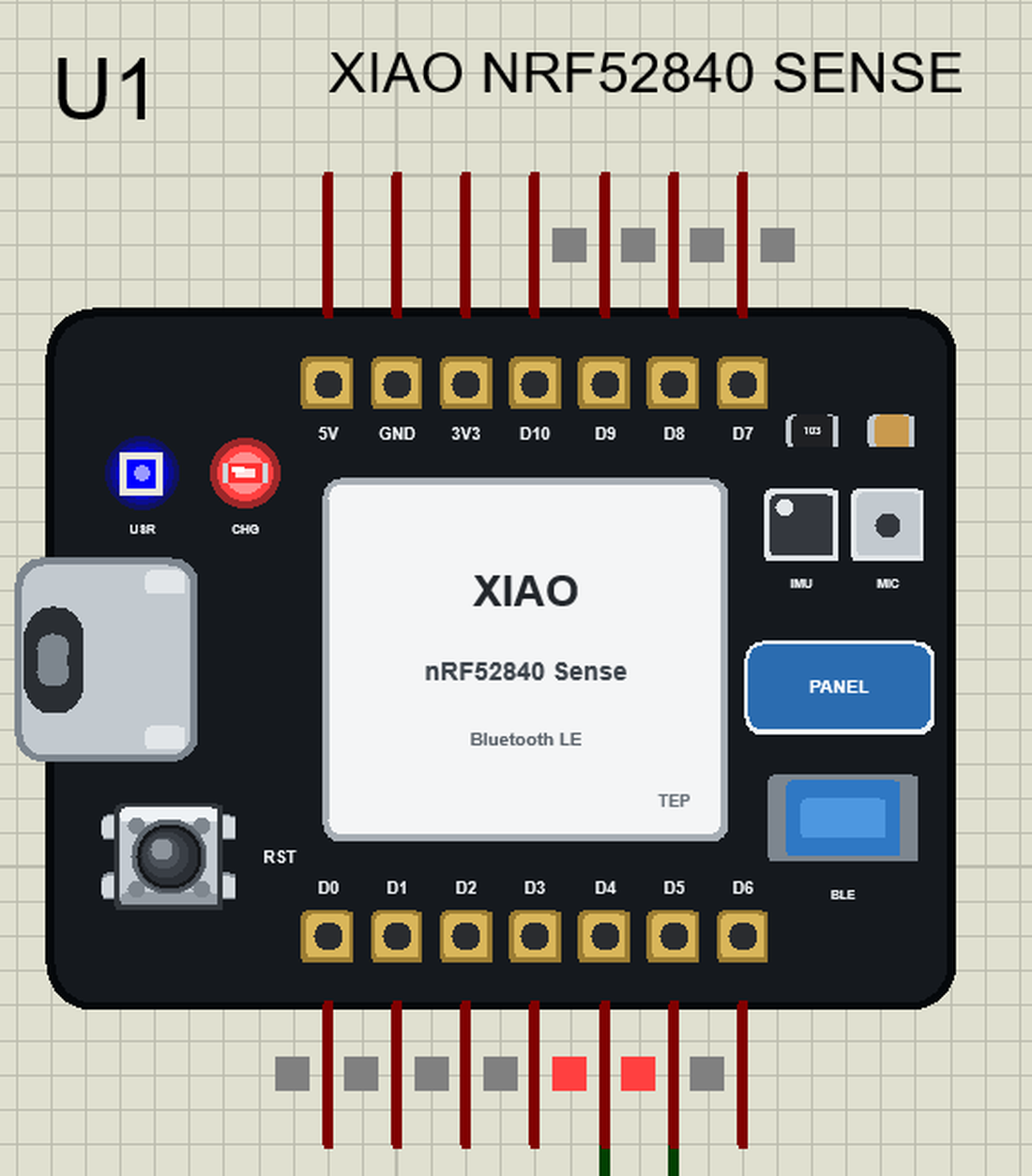
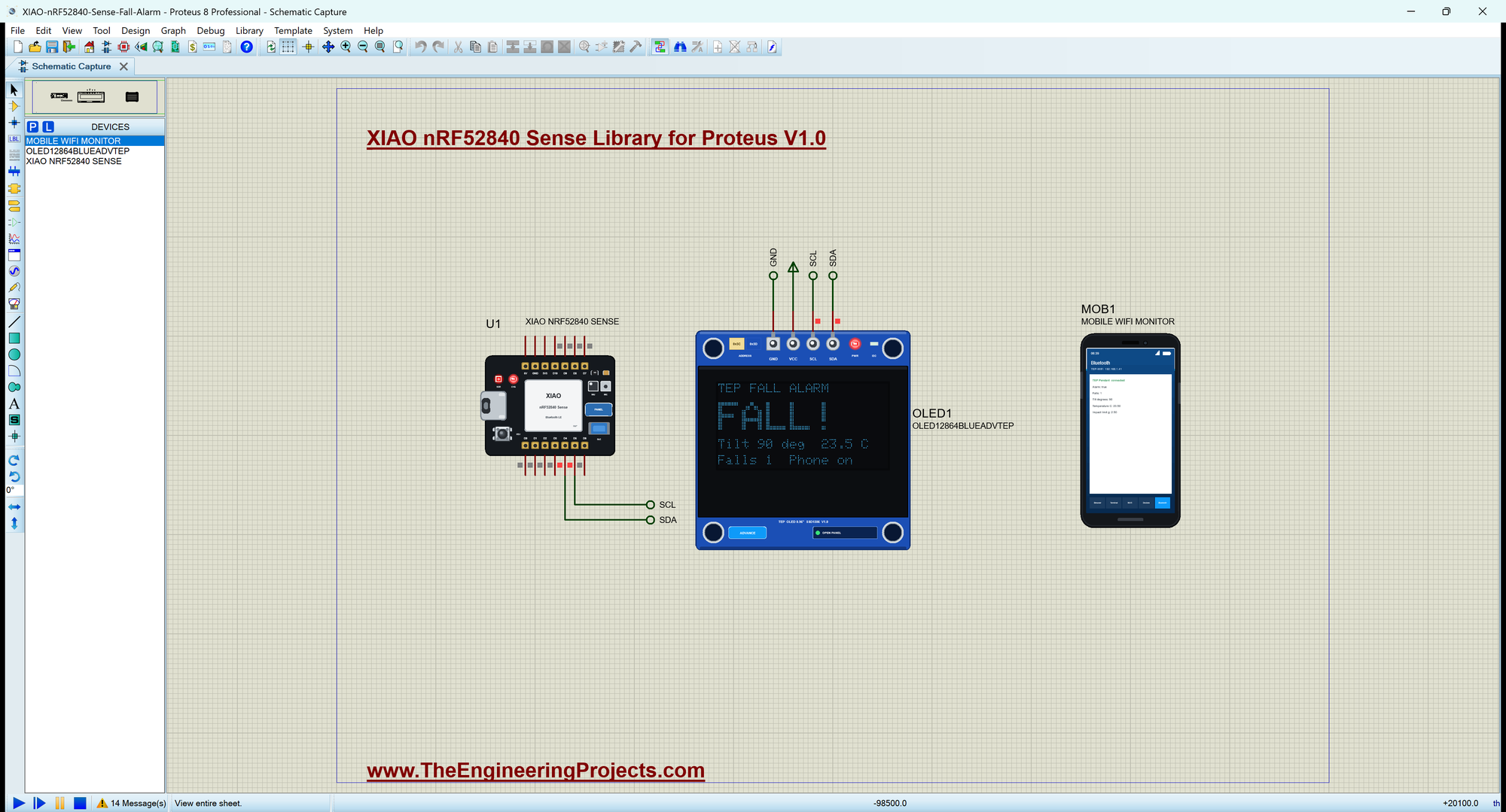
The circuit, the board and the results as they appear in XIAO nRF52840 Sense Library for Proteus: Bluetooth, IMU, Fall Alarm. Open an image for its full size.
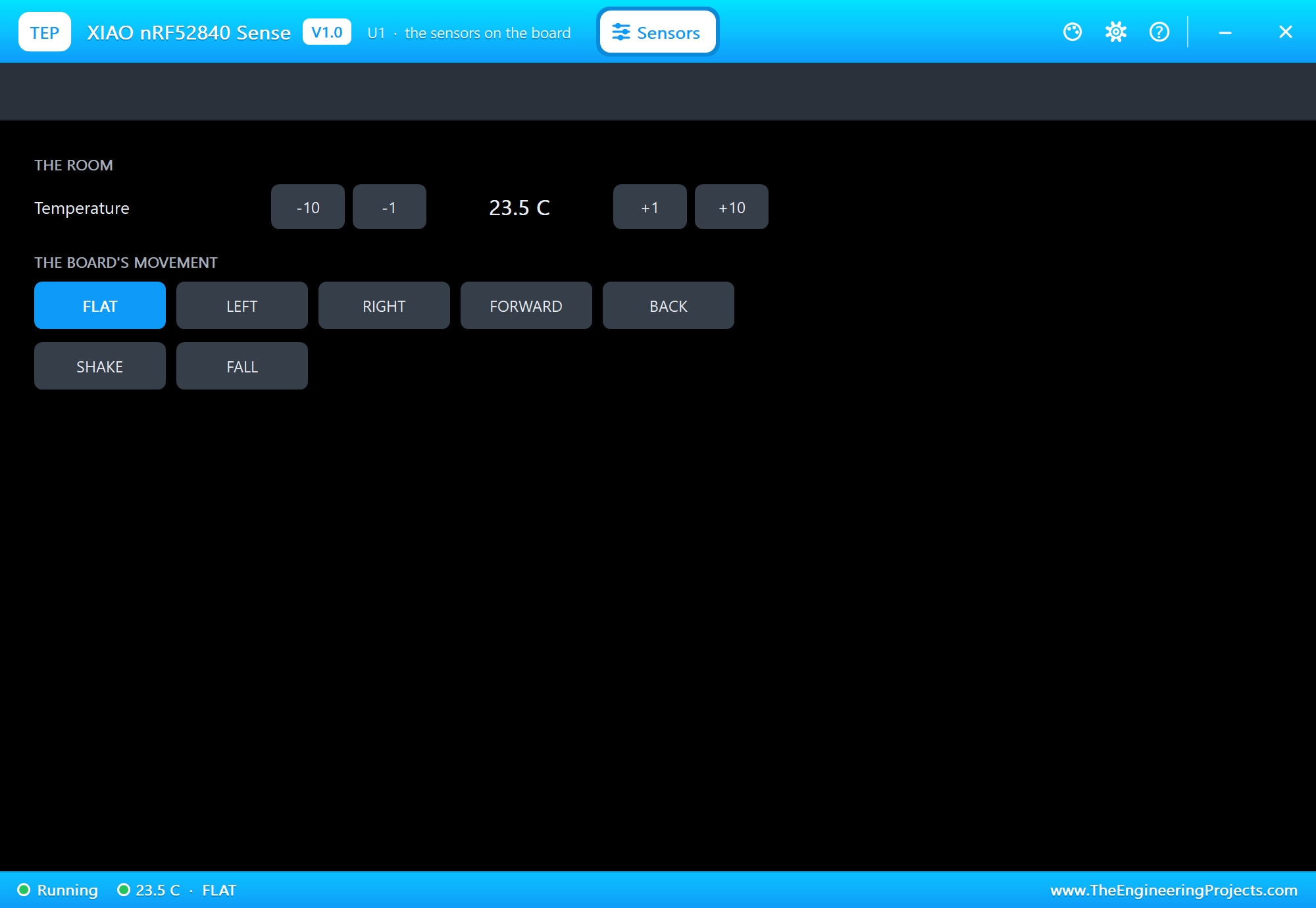
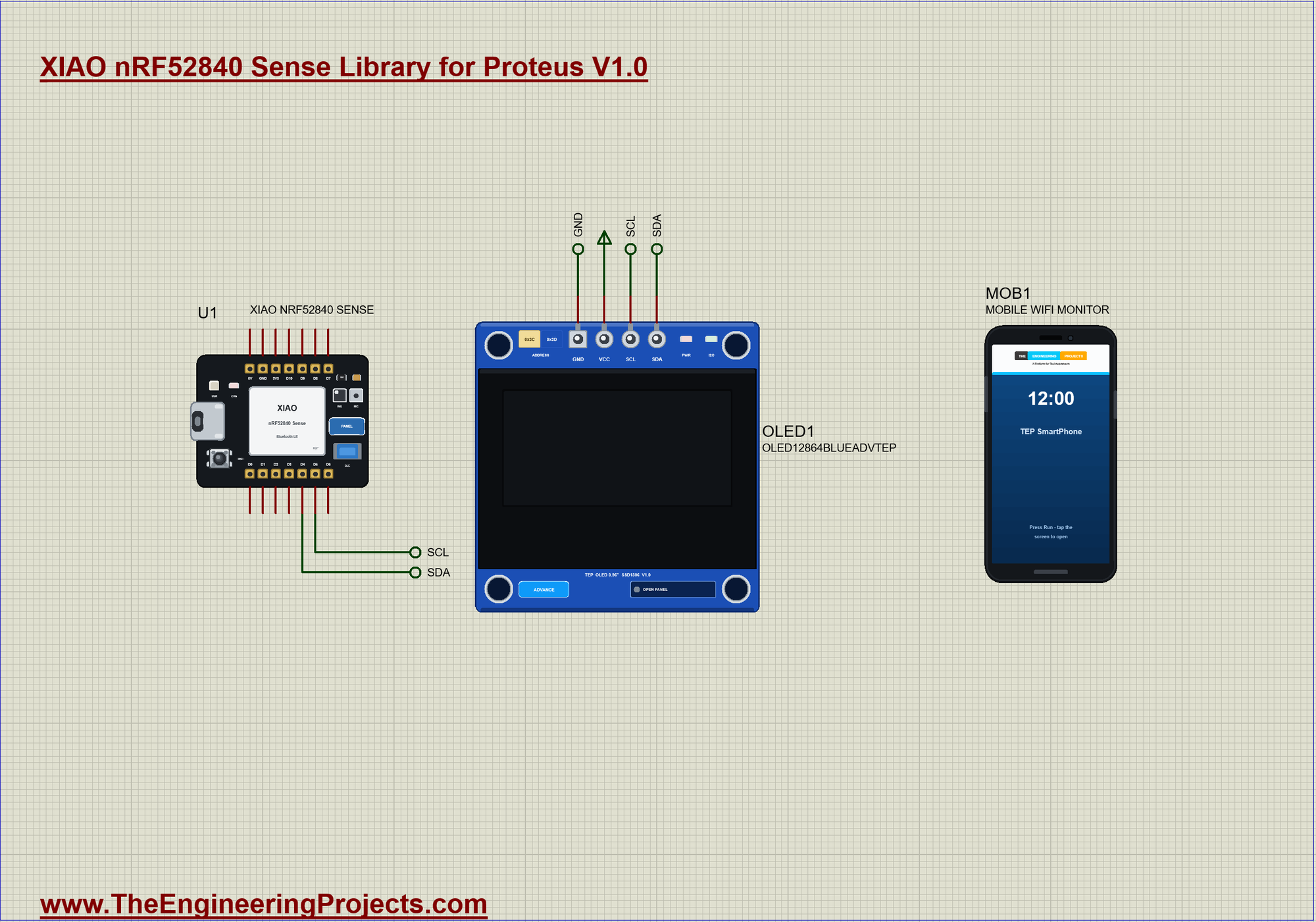
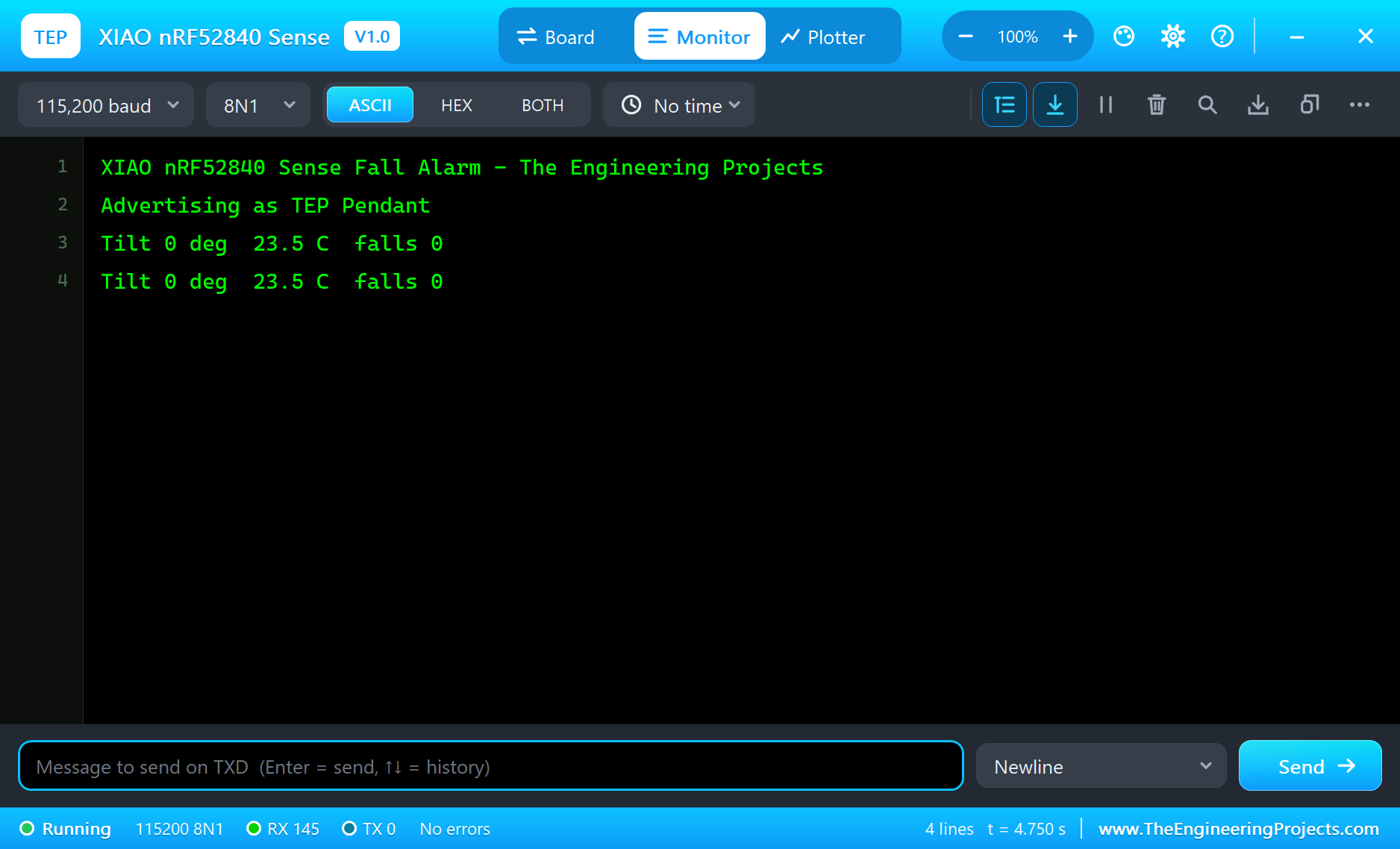
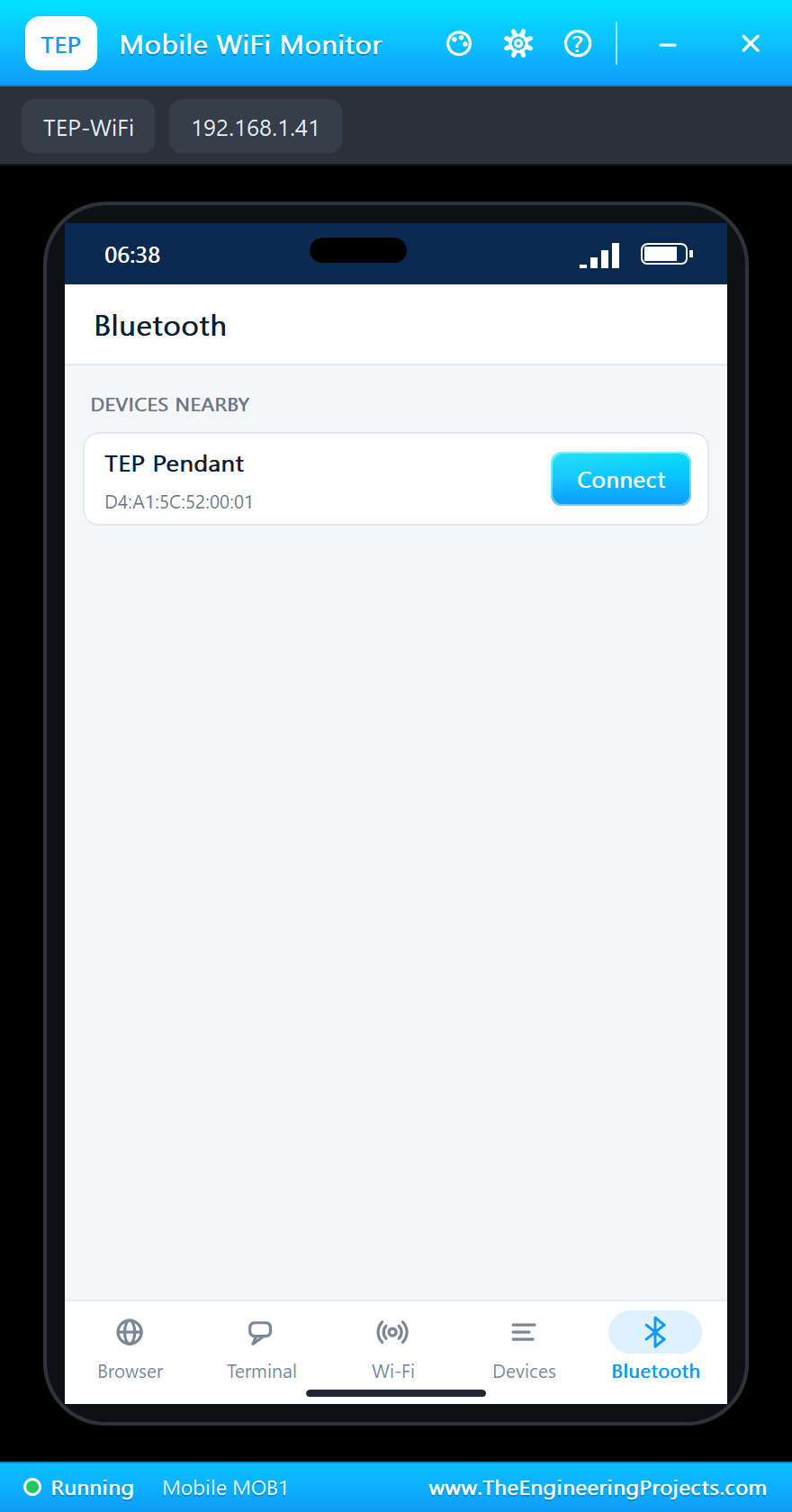
README
 README
XIAO nRF52840 SENSE LIBRARY FOR PROTEUS - V1.0 (YOUR SKETCH WITH BLUETOOTH LE AND THE BOARD'S MOTION SENSOR)
Designed by The Engineering Projects
www.TheEngineeringProjects.com

IMPORTANT LINKS
Article (read it first - pictures, step by step, every feature explained):
  https://www.theengineeringprojects.com/2026/11/xiao-nrf52840-sense-library-for-proteus.html
Report a bug or suggest a feature (our forum):
  https://www.theengineeringprojects.com/forum/category/xiao-nrf52840-sense-proteus-library
The demo's other parts are our libraries (included) - their articles:
  https://www.theengineeringprojects.com/2026/10/oled-ssd1306-library-for-proteus-v1-0.html
  https://www.theengineeringprojects.com/2026/10/mobile-wifi-monitor-library-for-proteus.html
Support us (the libraries are free):
  https://www.theengineeringprojects.com/donate

FILE STRUCTURE
XIAO-nRF52840-Sense-TEP-v1.0/
|-- Proteus Library Files/
|   |-- TEPLAPTOP.LIB                                    39.5 KB   the laptop (demo), to LIBRARY
|   |-- TEPMOBILE.LIB                                    13.1 KB   the phone (demo), to LIBRARY
|   |-- TEPOLED12864.LIB                                112.4 KB   the OLED (demo), to LIBRARY
|   |-- TEPXIAOBLE.LIB                                   24.5 KB   the XIAO nRF52840 Sense, to LIBRARY
|-- Proteus Model Files/
|   |-- TEPNET.DLL                                       2.89 MB   the board + monitors + network, to MODELS
|   |-- TEPOLED.DLL                                     323.0 KB   the OLED, to MODELS
|-- Arduino Code/
|   |-- XIAO_Fall_Alarm/XIAO_Fall_Alarm.ino               7.8 KB   the demo sketch
|   |-- TEP Boards for Proteus/hardware/                 1.06 MB   the Arduino IDE add-on 1.56.0 (254 files)
|-- Proteus Simulation/
|   |-- TEPNET.DLL                                       2.89 MB   copy of the model
|   |-- TEPOLED.DLL                                     323.0 KB   copy of the model
|   |-- XIAO_Fall_Alarm.hex                              73.7 KB   the demo sketch (U1)
|   |-- XIAO-nRF52840-Sense-Fall-Alarm.pdsprj            17.7 KB   the demo: a fall alarm with an OLED and a phone
|-- README.txt                                          ~11.8 KB   this file
Total: 7.76 MB (unzipped). The source code of the models is not included.

WHAT IS IT?
Proteus 8 has no nRF52840 processor model, so this is NOT a real nRF52840 chip. Our team has put a lot of effort into
building this board ourselves: it is the Seeed Studio XIAO nRF52840 Sense - the 21 x 17.8 mm board with an LSM6DS3TR-C
motion sensor, an RGB LED and a USB-C port - that runs YOUR Arduino sketch in Proteus:
  * You write a normal sketch for the XIAO's pins (D0 .. D10, A0 .. A5, analogRead 0-1023, analogWrite,
    attachInterrupt, tone, Wire, SPI, Serial, Serial1) and compile it in the Arduino IDE with our board package "TEP
    Boards for Proteus" 1.56.0 (in Arduino Code - see INSTALLATION).
  * Bluetooth LE works: #include <ArduinoBLE.h>, services, characteristics, BLE.advertise(), BLE.central(), written(),
    writeValue() and descriptors, as on a real board. The central is our Mobile WiFi Monitor: its Bluetooth app lists
    what advertises, connects, shows every characteristic live and writes a value.
  * The motion sensor answers: #include <LSM6DS3.h>, LSM6DS3 imu(I2C_MODE, 0x6A), imu.begin(), readFloatAccelX .. Z,
    readFloatGyroX .. Z and readTempC, with the same calls as Seeed's library. The board's Sensors window sets the
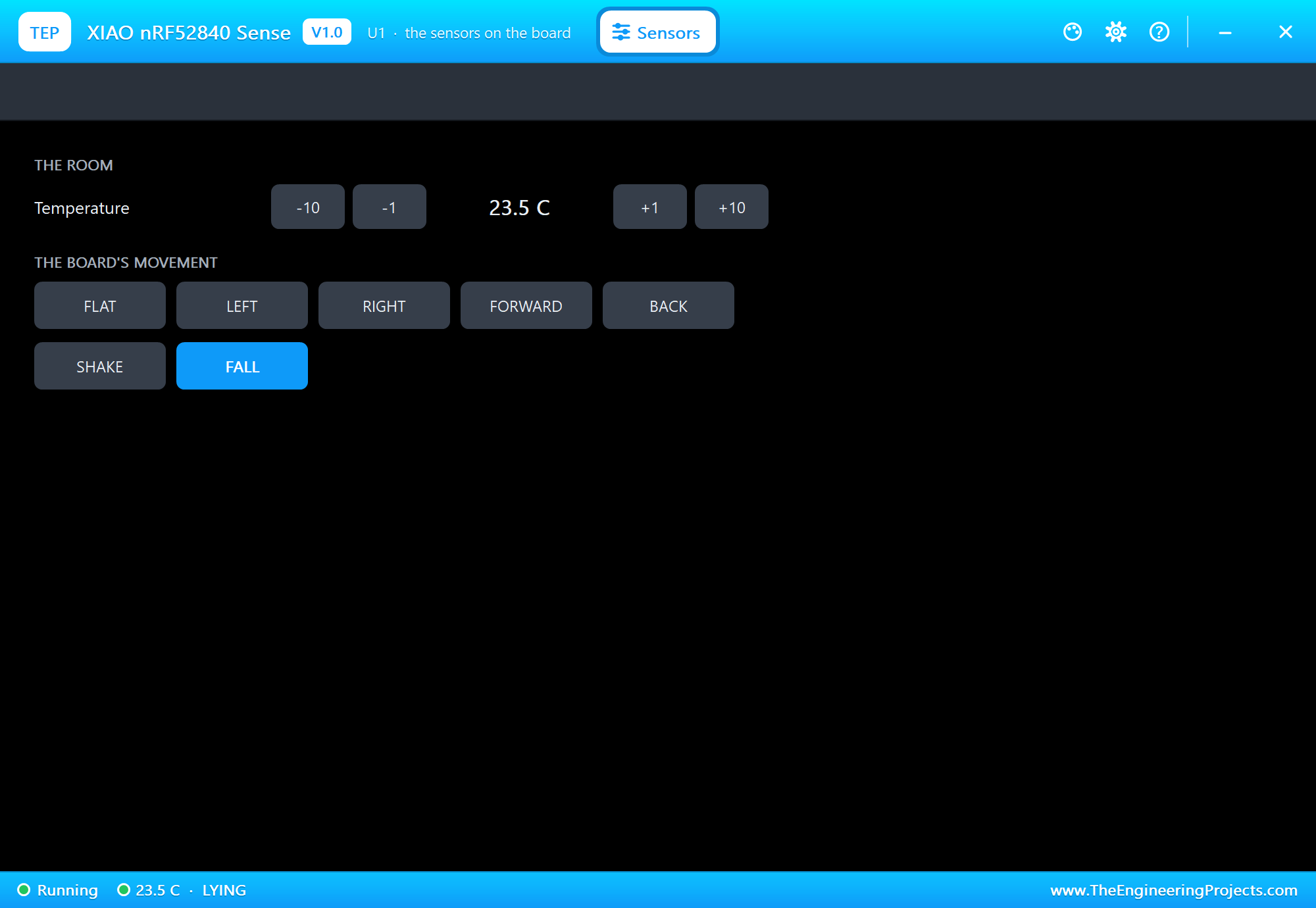
    temperature, a tilt, a shake or a whole fall.
  * The RGB LED is on the board: LED_RED, LED_GREEN and LED_BLUE, lit when LOW. LED_BUILTIN is LED_RED.
TEP additions: the PANEL pad opens the Sensors window, the USB port opens the serial monitor (the same window as our
TEP Serial Monitor Advance).
Limits (say them before you start): this board is a Bluetooth peripheral: the central API (BLE.scan, BLE.available and
the remote classes) is not in this version. The microphone (PDM) and the on-board flash are NOT modelled.
Your sketch gets 8 KB of RAM in the simulation (the real one: 256 KB), about 256 KB of flash, and int is 16 bits in
the simulation (use long for big numbers). No Mbed OS, no threads. The sensor gives the Sensors window's values,
without noise. See MODEL SCOPE AND LIMITS.

ONE DEVICE (search "NRF52840" in Pick Devices):
  XIAO NRF52840 SENSE  "XIAO nRF52840 Sense" V1.0 (Microprocessor ICs > Bluetooth Boards), prefix U, model TEPNET.DLL.
  Two TEP windows, none with a Windows title bar:
  the Sensors window (the PANEL pad) and the serial monitor (the USB port, 115200 baud: Monitor, Plotter and Board
  tabs).
The same TEPNET.DLL also runs our other sketch boards and the phone; it replaces any older TEPNET.DLL (keep only this
newest one in MODELS).

TEST STATUS
V1.0: verified in Proteus 8.5 on 31 Oct 2026 with the demo project as shipped. What the Proteus run showed:
* XIAO-nRF52840-Sense-Fall-Alarm: "Advertising as TEP Pendant", every 2 s "Tilt 0 deg  23.5 C  falls 0", the OLED "ALL
  OK", the green LED.
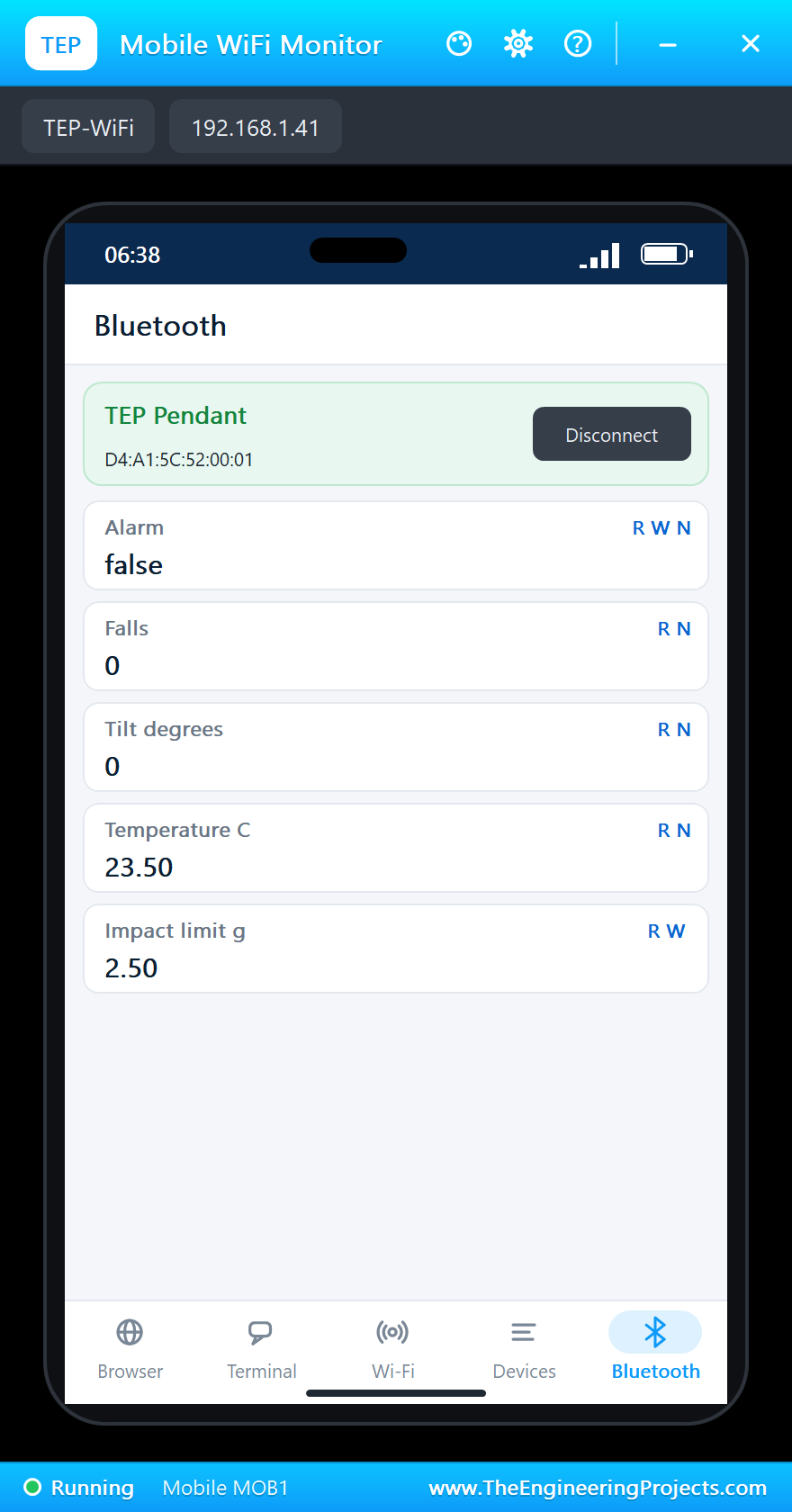
* The phone's Bluetooth app listed TEP Pendant; Connect: ">> Phone connected", the blue LED, and the app showed all
  five characteristics live.
* The Sensors window: SHAKE ">> A bump: 3.0 g, no free fall: no alarm"; LEFT "Tilt 45 deg"; FALL, then FLAT in time:
  ">> Free fall", ">> Impact: 3.7 g", ">> Got up again: no alarm".
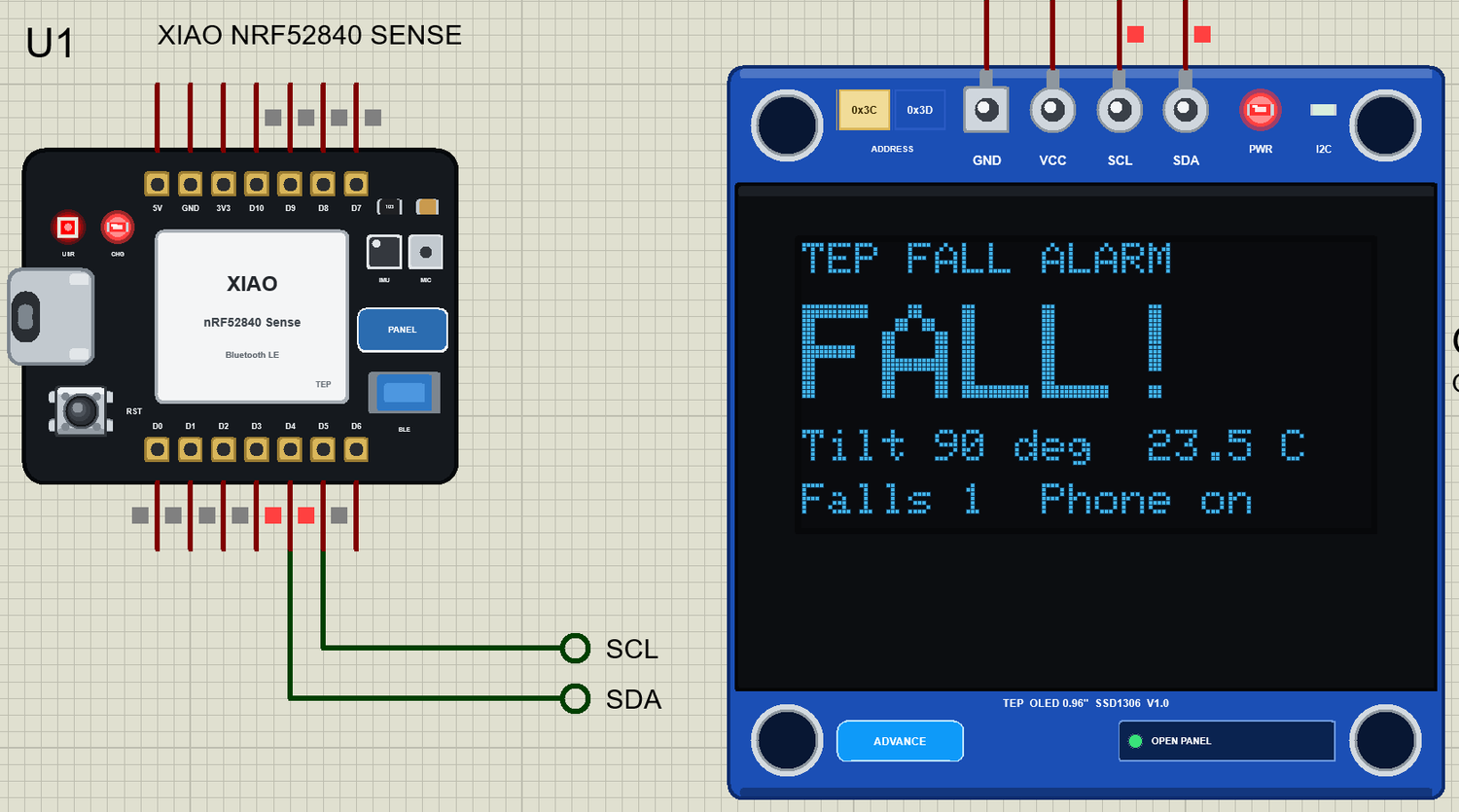
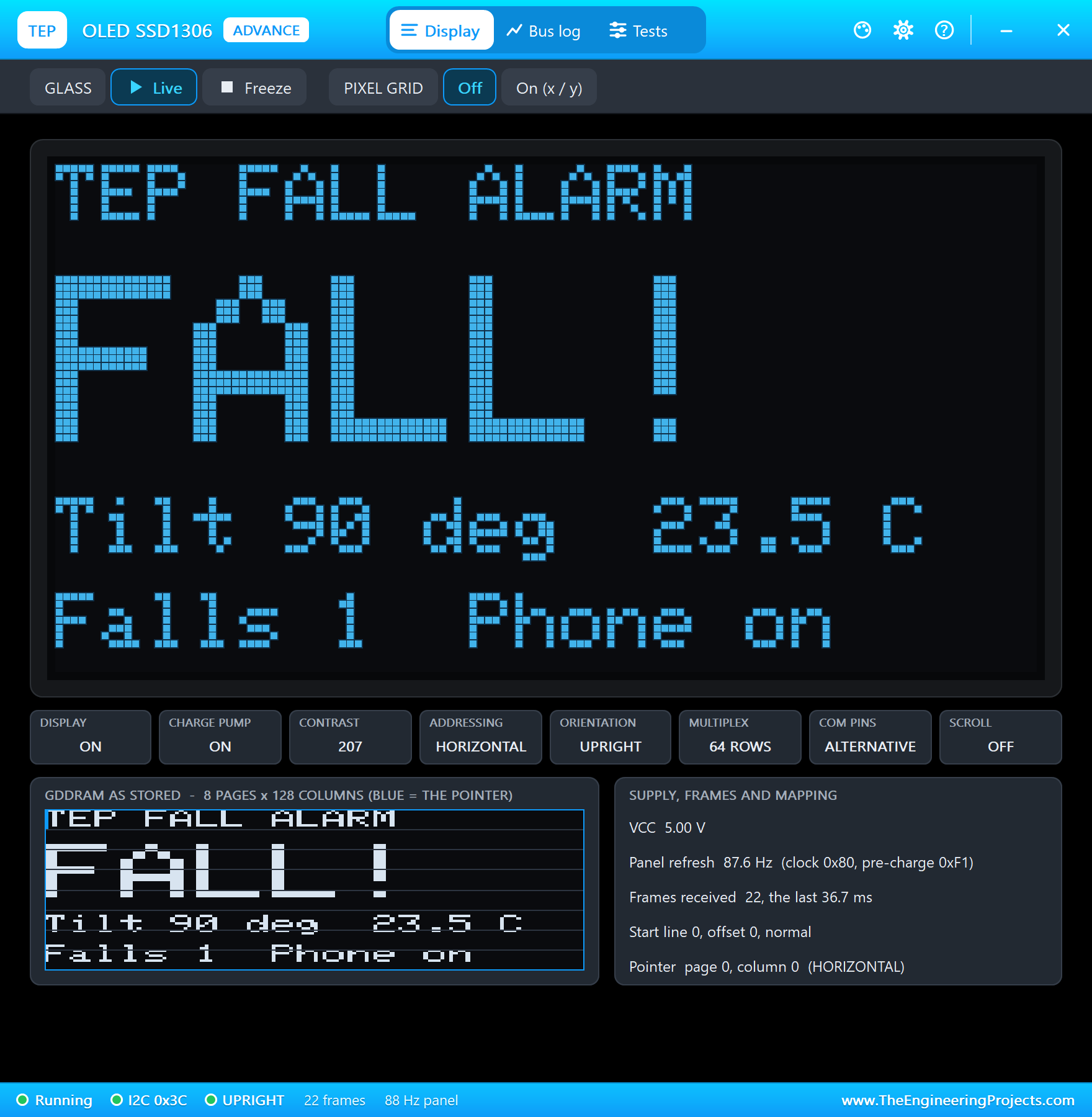
* FALL and staying down: ">> Free fall", ">> Impact: 3.4 g", ">> FALL! Alarm on": the red LED, "FALL!" on the OLED,
  Alarm true and Falls 1 on the phone.
* 0 written to the Alarm on the phone: ">> Phone: alarm cleared". 3 written to the Impact limit: ">> Phone: impact
  limit 3.0 g". Temperature +10: "33.5 C". Disconnect: ">> Phone left".
* about 55 s of simulation, no errors, with the Sensors window, the OLED's window, the phone and the monitor open.

INSTALLATION (about 3 minutes)
1. Close Proteus. Extract the WHOLE ZIP to a normal folder (e.g. Desktop).
2. Copy everything in "Proteus Library Files" to the LIBRARY folder of Proteus, for example:
     C:\Program Files (x86)\Labcenter Electronics\Proteus 8 Professional\LIBRARY
   (on some PCs: C:\ProgramData\Labcenter Electronics\Proteus 8 Professional\LIBRARY). TEPXIAOBLE.LIB is the board;
   the others are the demo's parts: TEPOLED12864.LIB, TEPMOBILE.LIB and TEPLAPTOP.LIB.
3. Copy the DLLs from "Proteus Model Files" (TEPNET.DLL, TEPOLED.DLL) to the MODELS folder (...\Proteus 8
   Professional\MODELS) -
   replace an older TEPNET.DLL (this one is the first that knows this board).
4. Delete TEPXIAOBLE.IDX from the LIBRARY folder if it is there.
5. The Arduino IDE (only to compile your own sketches - the demo has its HEX file): copy the folder
   "Arduino Code\TEP Boards for Proteus\hardware" into your sketchbook folder (normally Documents\Arduino), so that
   Documents\Arduino\hardware\tep\avr\boards.txt exists (replace an older copy); restart the IDE. The Arduino AVR Boards
   platform must be installed (it comes with IDE 1.8.x; in IDE 2.x install "Arduino AVR Boards" from the Boards
   Manager once).
   Tools > Board > TEP Boards for Proteus > XIAO nRF52840 Sense (TEP Proteus). ArduinoBLE and the LSM6DS3 library are
   in the board package. From the Library Manager: Adafruit SSD1306 and Adafruit GFX.
6. Start Proteus. In Pick Devices (P) search "NRF52840".

RUN THE DEMO
Keep the .hex file and the DLLs beside the project in "Proteus Simulation".
XIAO-nRF52840-Sense-Fall-Alarm.pdsprj - U1 the XIAO nRF52840 Sense (XIAO_Fall_Alarm.hex) is a wearable fall alarm:
OLED1 = the 0.96" SSD1306 OLED (Advance) on I2C (SDA D4, SCL D5), MOB1 = the phone (Mobile WiFi Monitor).
Press Run. The OLED says ALL OK, the LED is green, and the monitor prints the tilt every two seconds. On the phone
open the Bluetooth app and click Connect beside TEP Pendant: the LED turns blue and the values appear.
Click the PANEL pad for the Sensors window. SHAKE is a bump: no alarm. LEFT is leaning over: no alarm. FALL is a real
fall: free fall, an impact, then lying on one side. Three seconds later the alarm is on: the red LED, FALL! on the
OLED, Alarm true on the phone.
Click FLAT within the three seconds and the sketch says the wearer got up: no alarm. To clear an alarm, click the
phone's Alarm row, type 0 and press Send.
Closed a window? The USB port opens the monitor, the PANEL pad the Sensors window, a click on the phone's screen the
phone.

THE PINS (the label on the part, what it can do in the simulation)
  D0 .. D3        A0 .. A3: analogRead 0 .. 1023 for 0 .. 3.3 V, GPIO, PWM, interrupt
  D4, D5          Wire SDA, SCL (A4, A5), or GPIO
  D6, D7          Serial1 TX, RX, or GPIO
  D8, D9, D10     SPI SCK, MISO, MOSI, or GPIO
  3V3, 5V, GND    3.3 V (the logic), 5 V, ground
LED_BUILTIN is LED_RED. LED_RED, LED_GREEN and LED_BLUE are the RGB LED, lit when LOW. Serial is the USB: the board's
built-in monitor. RST on the board resets the sketch.

PROPERTIES (double-click the part > Edit Properties)
  PROGRAM      the sketch's HEX (Arduino IDE: Sketch > Export Compiled Binary with XIAO nRF52840 Sense (TEP Proteus))
  TEMPERATURE  the temperature at Run (C)
  MONITOR      YES = the built-in serial monitor on Serial;  BAUD  its speed (115200, or AUTO)
  AUTOOPEN     YES = the monitor window opens at Run (the demo: YES)

TROUBLESHOOTING
* The phone's list is empty: BLE.begin(), then BLE.advertise(). The phone needs this TEPNET.DLL or newer.
* written() is never true: call BLE.poll() in loop(), and give the characteristic BLEWrite.
* imu.begin() does not return 0: the board in Tools must be XIAO nRF52840 Sense (TEP Proteus).
* The OLED stays dark: SDA on D4, SCL on D5, the address 0x3C.
* The RGB LED looks inverted: it lights when the pin is LOW.
* An integer goes wrong above 32767: int is 16 bits in the simulation - use long.

BUG REPORTS AND FEATURE REQUESTS
Please post them in our forum with a screenshot and the Serial Monitor text:
  https://www.theengineeringprojects.com/forum/category/xiao-nrf52840-sense-proteus-library

LICENCES AND THIRD-PARTY NOTES
* The board model (TEPNET.DLL), the symbols and artwork (TEPXIAOBLE.LIB) and the OLED model are made by The
  Engineering Projects. The source code of the models is not included.
* TEP Boards for Proteus (Arduino Code): its core, the variants and the EEPROM, SPI and Wire libraries are modified
  copies of the Arduino AVR core 1.8.6 - GNU Lesser General Public License 2.1 (LGPL 2.1, the text:
  LICENSE-LGPL-2.1.txt); its WiFi, WebServer, ArduinoBLE, the sensor libraries and the others and our core files are
  MIT (LICENSE-MIT.txt).
* Our ArduinoBLE and LSM6DS3 have the calls of the libraries of those names by Arduino and Seeed Studio; their code is
  ours.
* The demo sketch uses Adafruit SSD1306 and Adafruit GFX (BSD): install them with the Library Manager to rebuild.
* Proteus is a product of Labcenter Electronics and is not included. XIAO is a name of Seeed Studio, and nRF52840 of
  Nordic Semiconductor. The Bluetooth word mark belongs to Bluetooth SIG. This library is not made or endorsed by them
  or by Labcenter.

REBUILDING THE FIRMWARE (OPTIONAL)
The HEX file is supplied. Install TEP Boards for Proteus (INSTALLATION step 5), open Arduino Code\XIAO_Fall_Alarm,
select XIAO nRF52840 Sense (TEP Proteus) and use Sketch > Export Compiled Binary. For a real board use Seeed's nRF52
board packages (their wiki says which to pick), and install ArduinoBLE and Seeed Arduino LSM6DS3. Its pins work at 3.3
V.

MODEL SCOPE AND LIMITS
Modelled: the XIAO's pins; digital I/O, analogRead 0 .. 1023, PWM (analogWrite), tone and attachInterrupt through the
board model; Serial (the board's monitor), Serial1, Wire and SPI; the RGB LED and the charge LED; Bluetooth LE as a
peripheral, with one central; the LSM6DS3 through the library above.
Not modelled: the nRF52840 itself, Mbed OS, the PDM microphone, the 2 MB on-board flash, the battery charger, the
Bluetooth central role, pairing and bonding, signal strength. The simulation runs below real time.

VERSION
TEP XIAO nRF52840 Sense library V1.0 (Nov 2026). Device XIAO NRF52840 SENSE (TEPXIAOBLE.LIB / TEPNET.DLL), TEP Boards
for Proteus 1.56.0 (adds this board and the LSM6DS3 library).
Demo sketch XIAO_Fall_Alarm V1.0. Demo parts: OLED12864BLUEADVTEP and MOBILE WIFI MONITOR.Development1 release
 Development1 release
-
V1.0XIAO nRF52840 Sense Library for Proteus V1.0this page
V1.0 is the only release in the Download Center so far. When a newer version is published, it appears above with its own download page.
Installation10 steps
 Installation10 steps
From the download to a working project, in order. The steps follow what the package contains.
You will need
- Proteus Design SuiteProteus 8 or newer (Labcenter), on Windows
- Arduino IDE1.8 or 2.x, with the board of the tutorial chosen under Tools → Board
- The compiler named in the tutorialto build the source files into firmware
- Any archive toolWindows, macOS and Linux extract ZIP files on their own

Steps
- 1
Extract the archive
Right-click xiao-nrf52840-sense-tep-v1-0-2cee8c4f6b274eee80e8e17a2aa89ec9.zip and choose Extract All (or open it with 7-Zip or WinRAR) into a folder you can find again. Keep its folder structure (XIAO-nRF52840-Sense-TEP-v1.0) as it is.
- 2
Copy the library files into Proteus
Move TEPLAPTOP.LIB, TEPMOBILE.LIB and TEPOLED12864.LIB and 1 more and the files into the LIBRARY folder of your Proteus installation: C:\Program Files (x86)\Labcenter Electronics\Proteus 8 Professional\LIBRARY for Proteus 8, or the matching Proteus 7 folder. Older versions keep it under ProgramData\Labcenter Electronics. If Proteus is open, close it first.
- 3
Add the simulation model
Copy TEPNET.DLL and TEPOLED.DLL into the MODELS folder next to LIBRARY, so the component can run, not only be drawn.
- 4
Restart Proteus and place the component
Start Proteus, open a schematic, press P (Pick Devices) and search for the component by the name used in the tutorial. It appears with its pins ready to wire.
- 5
Install the Arduino library
In the Arduino IDE choose Sketch → Include Library → Add .ZIP Library and pick the library, or copy its folder into Documents\Arduino\libraries. Restart the IDE to see its examples.
- 6
Open the sketch in the Arduino IDE
Open XIAO_Fall_Alarm.ino, eeprom_clear.ino and eeprom_crc.ino and 17 more, select your board and port under Tools, then Verify. Sketch → Export Compiled Binary writes the HEX file a simulation needs.
- 7
Build the source code
Open abi.cpp, Arduino.h and binary.h and 52 more in the compiler named in the tutorial (MikroC, Keil, MPLAB, Code Composer or the Arduino IDE) and build it to get the firmware.
- 8
Load the HEX file
In Proteus double-click the microcontroller, set Program File to XIAO_Fall_Alarm.hex and run the simulation. For real hardware, flash the same file with your programmer.
- 9
Open the example simulation
Open XIAO-nRF52840-Sense-Fall-Alarm.pdsprj in Proteus to see the wiring exactly as in the tutorial. Check the controller's Program File path, then press Play.
- 10
Follow the tutorial
XIAO nRF52840 Sense Library for Proteus: Bluetooth, IMU, Fall Alarm explains every connection and setting in order; keep it open beside the files while you build.
FAQs9 questionsContact TEP
 FAQs9 questions
How do I download XIAO nRF52840 Sense Library for Proteus V1.0?
Wait for the 30-second guest countdown on this page, then press the download button; the file comes straight from our storage. Members who are logged in skip the wait. If the browser opens the file instead of saving it, use its Save as option. The download link is made for you when the countdown ends and works for 15 minutes; a saved or shared link stops working, so share this page instead.
What is inside the archive?
XIAO nRF52840 Sense Library for Proteus V1.0 comes as a ZIP archive of 266 files (3.5 MB, 7.8 MB unpacked) holding Proteus library files, simulation model DLLs, a Proteus simulation, an Arduino sketch, an Arduino library, compiled HEX firmware and source code. Open the File Structure tab for the full list of 266 files.
What should I do if the download does not start?
Check the browser's download list first; an ad blocker or a company firewall can also hold it back, so try another browser or network. If the file arrives incomplete, download it again. For an installation problem, read the Install tab or tell us in the comments with your software version and the exact error message.
Is this file free?
Yes. Every file in the TEP Download Center is free for learning, personal and student projects. If you share it, link back to this page or the tutorial so others find the latest version.
How do I check that the file arrived complete?
Compare its SHA-256 with the one on this page, 7a744c1824f8c3f5c80b7af7cc6ae7e4b613f3e9fd790339dcba408438af57fa. In PowerShell run Get-FileHash "xiao-nrf52840-sense-tep-v1-0-2cee8c4f6b274eee80e8e17a2aa89ec9.zip"; on macOS or Linux run shasum -a 256 "xiao-nrf52840-sense-tep-v1-0-2cee8c4f6b274eee80e8e17a2aa89ec9.zip". The same value means the file is exactly the one in our storage; a different one means the download broke off, so download it again.
Do I need WinRAR to open the ZIP file?
No. Windows, macOS and Linux open ZIP archives on their own (Extract All, or double-click). WinRAR and 7-Zip work too. Extract the whole archive before using the files.
Where do I put the LIB and IDX files?
Both files go into the LIBRARY folder of your Proteus installation (Proteus 8: C:\Program Files (x86)\Labcenter Electronics\Proteus 8 Professional\LIBRARY; Proteus 7 has the same folder under its own name). Restart Proteus afterwards and search for the component with P.
Which Proteus version does the library need?
The tutorial names the Proteus version the library was made and tested with. Most TEP libraries work in Proteus 7 and Proteus 8; if the component does not appear after a restart, check that both the LIB and the IDX file were copied and that Proteus was fully closed while copying.
How do I get the HEX file into the simulation?
Compile the sketch in the Arduino IDE (Sketch → Export Compiled Binary gives you the HEX next to the sketch), then in Proteus double-click the board, set Program File to that HEX and run.
Members skip the wait. Log in or join TEP.

- 0Total downloads
- 4%Popularity
- ProteusCategory
- 0Comments
- ssyedzainnasirUploaded by
- 5 Nov 2026Uploaded at


 SHA-256
7a744c1824f8c3f5c80b7af7cc6ae7e4b613f3e9fd790339dcba408438af57fa


 Need help with this file?
 Tags
Related Proteus
All Proteus tutorials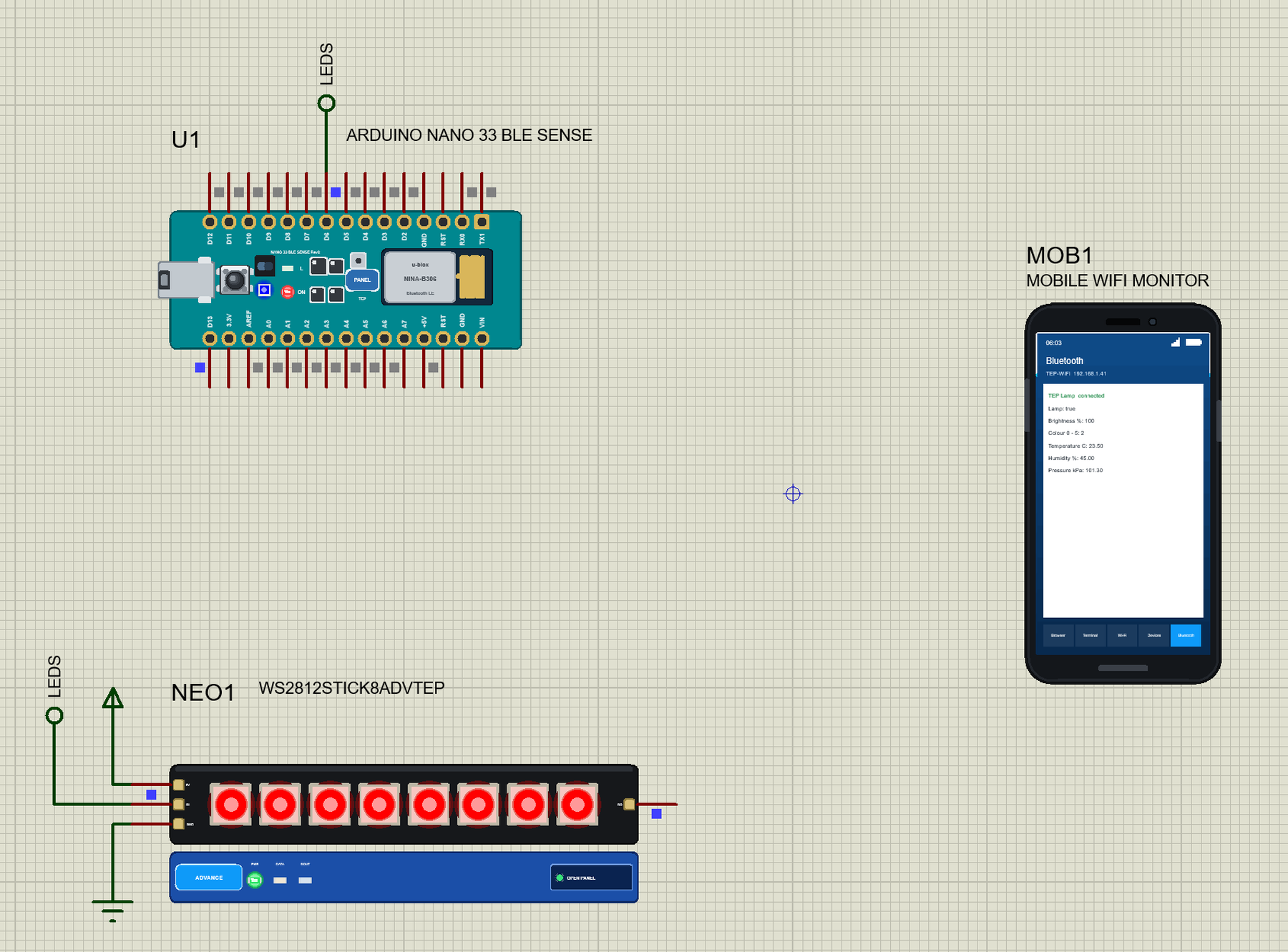
More Bluetooth project files
All Bluetooth tutorials


Comments
0