Hi Guys! Hope you all are doing great! We always feel happy when you come back again and again for useful information so you can excel and grow in your relevant field. Today, I am going to unlock the details on the Introduction to 2n2219. It is an NPN (negative-positive-negative) bipolar junction transistor (BJT) which is specially designed for a small signal general purpose and switching applications. It contains P doped semiconductor that lies between the two layers of N doped material.
You can also check an Introduction to 2n2905 which is a complementary PNP transistor of this NPN transistor.
I'll try to cover every aspect related to this transistor so you don't need to go anywhere and you find all information in one place. Let's dive in and ...
XBee modules have become a cornerstone for wireless communication in today's electronics and embedded systems projects. Whether you are building a home automation system, an industrial control network, or simple point-to-point communication between devices, XBee offers a reliable and easy-to-use solution. In this comprehensive introduction, we will explore what the XBee module is, how it works, its core features, and how you can integrate it into microcontroller-based projects.
In future tutorials, we’ll delve deeper into specific interfacing guides, including how to interface the XBee module with a computer and connecting XBee to an Arduino. While Arduino will be our primary focus due to its popularity and accessibility, you can also connect XBee modules to other microcontrollers such as ...
Hello everyone! I hope you will be absolutely fine and having fun. Today, I am going to give you a detailed Introduction to ULN2003. We will also discuss the ULN2003 Datasheet, Pinout, Circuit Diagram & Proteus Simulation. If you have ever controlled any motor (i.e. DC Motor, Stepper Motor etc.) with a microcontroller (i.e. PIC, Arduino etc.), then you must have heard about drivers. Why do we need to use drivers? We use drivers (to control motors) because of two reasons.
First: Microcontrollers operate at 5V while motors operate at different voltages (5V, 12V, 24V etc.).
Second: Motors are Inductive loads thus they produce back emf, which may damage your microcontroller permanently (if not handled correctly).
Because of these two reasons, we have to use the driver in between t ...
Hello geeks, Welcome to our new project. As most readers have already seen the coffee vending machine or maybe you are drinking coffee while reading this article and if you are a tinker or a geek, it must have come to your mind how to make a coffee vending machine on your own. In today's tutorial, we are going to learn how to make a Smart Coffee Vending Machine using Arduino with Proteus Simulation for the same.
We can use this project for an engineering project’s showcase for electronics, electrical engineering students, and can be used in offices as well.
Coffee is the second most popular drink in the world and it is one of the oldest beverages of the world. According to Wikipedia, more than 2 billion cups of coffee are consumed every day in the ...
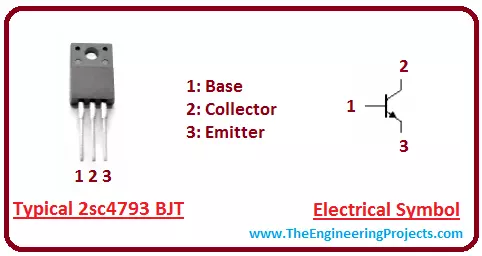
Hey Guys! I aspire you a very happy and promising life. My job is to give you daily dose of information so you can stand out of the party. Today, I am going to uncover the details on the Introduction to 2sc4793. It is an NPN (Negative-positive-negative) bipolar junction transistor (BJT) which is mainly used for amplification and switching purpose. I'll give you a brief details about this transistor and try to cover as many aspects as possible related to this transistor. Let's hop on the board and explore what kind of transistor is this and what are its main applications? Let's get started.
Introduction to 2sc4793
2sc4793 is an NPN bipolar junction transistor where P-doped layer is sandwiched between the two N-doped layer.
It is mainly three t ...
Hello friends, I hope you all are doing great. In today's tutorial, we are gonna have a look at a detailed Introduction to DS18B20. DS18B20 is a temperature sensor that can measure temperature from -55oC to +125oC with an accuracy of +- 5%. It follows 1 wire protocol which has revolutionized the digital world. Because of its 1 wire protocol, you can control multiple sensors from a single pin of Microcontroller.
DS18B20 is normally used in industrial projects where high accuracy is necessary. I will give you a detailed overview of this temperature sensor in today's post where we will have a look at its Pinout, working, protocol, etc. I will also share some links to projects where I have interfaced it with Arduino or other microcontrollers. If you have any questions, please ask in comment ...
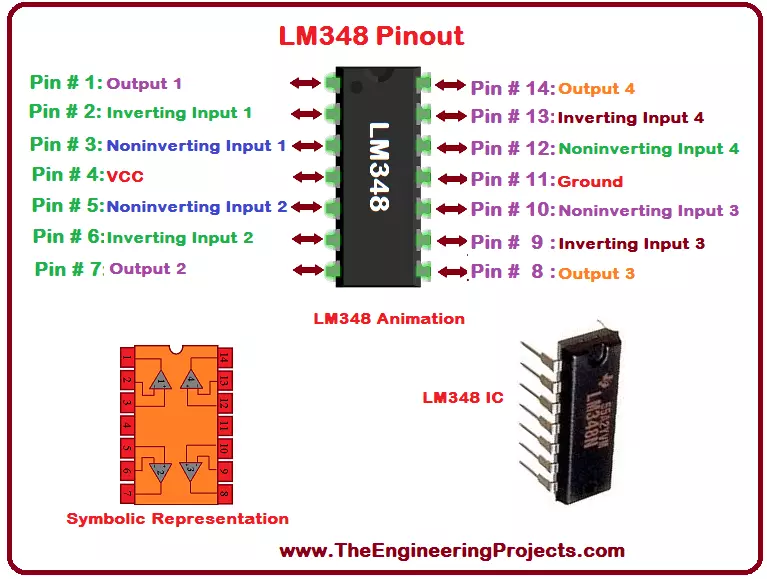
Hello everyone! I hope you all will be absolutely fine and having fun. Today, I am going to share my knowledge on Introduction to LM348. LM-348 i basically a General Purpose (GP) Operational Amplifier. It is an independent and quadruple operational amplifier. LM 348 has similar characteristics in comparison to uA741. It is an internally compensated amplifier having high gain.
LM-348 has four internal amplifiers. We can achieve isolation between these amplifiers by biasing each of the amplifier independently. This isolation can be done using different techniques e.g. layout technique. It can be used at several different places where amplifier matching is needed. LM 348 has very low supply current drain as compared to the standard 741. Moreover, I ...
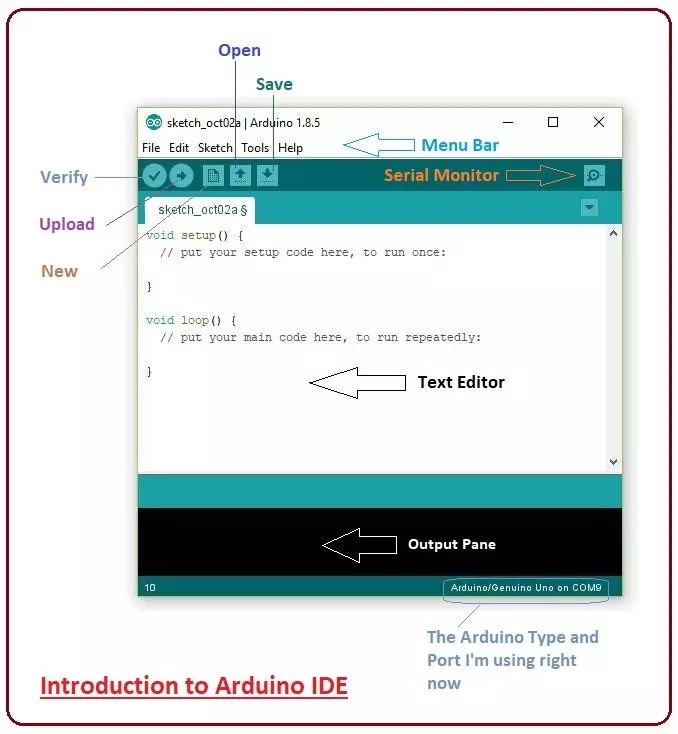
Hey Guys! Hope you are doing well. Today, I'll discuss the detailed Introduction to Arduino IDE, where IDE stands for Integrated Development Environment - An official software introduced by Arduino.cc, that is mainly used for writing, compiling and uploading the code in almost all Arduino modules/boards. Arduino IDE is open-source software and is easily available to download & install from Arduino's Official Site.
In this post, I'll take you through the brief Introduction of the Software, how you can install it, and make it ready for your required Arduino module. Let's dive in and get down to the nitty-gritty of this Software.
Introduction to Arduino IDE
Arduino IDE is an open-source software, designed by Arduino.cc and mainly used for wri ...
Hello Guys! Hope you’re well today. I welcome you on board. Thank you for clicking this read. In this post today, I’ll walk you through the Introduction to AMS1117.
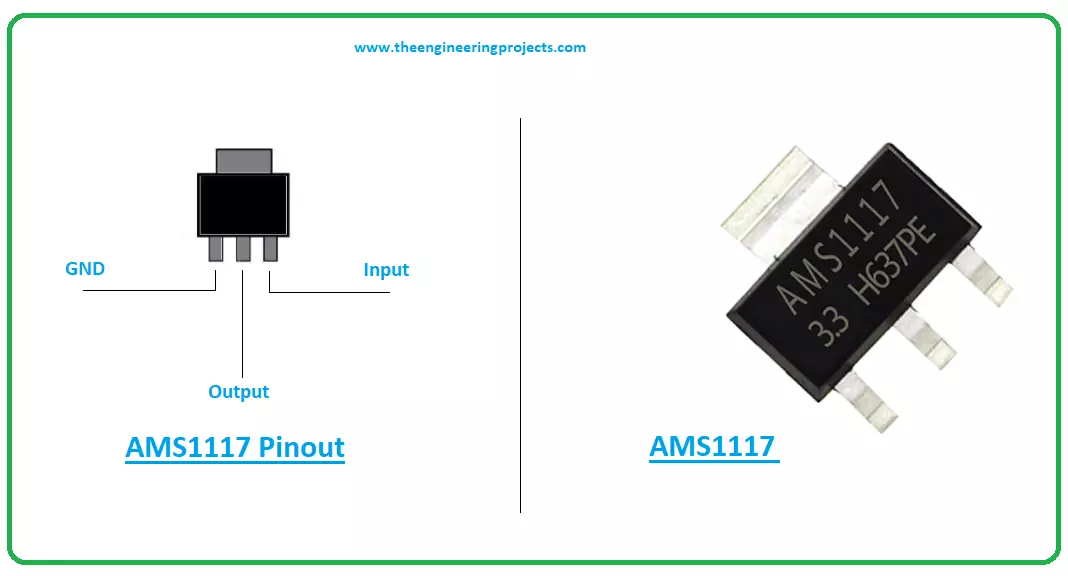
The AMS1117 is a common voltage regulator that comes with both fixed and customizable voltages. It is a 3-pin device mainly used to drive load under 1A. The output voltage ranges from 1.5V to 5V. When it works at maximum current, it results in a low dropout voltage of 1.3A.
I suggest you read this post all the way through, as I’ll be discussing Pinout, datasheet, features, and applications of this tiny device AMS1117.
Let’s jump right in.
Introduction to AMS1117
The AMS1117 is a common voltage regulator mainly used for high-efficiency linear regulation and post-regulation switchi ...
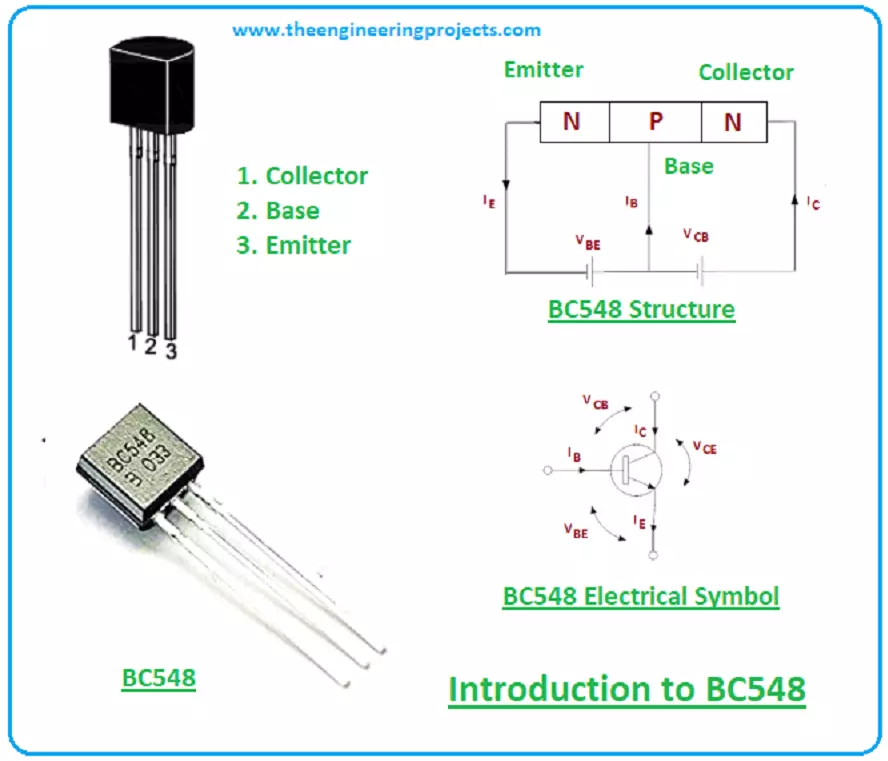
Hi Friends! Glad to see you here. I hope you’re well today. In this post, I’ll walk you through the Introduction to BC548. BC548 is a general-purpose transistor that falls under the family of NPN transistors. It carries three pins that are mainly used for external connection with the circuit. The small current at one terminal is used to control the large current at other terminals. Moreover, it can drive loads under 500mA and is available in TO – 92 package.
I suggest you read this post all the way through as you’ll get to know all nuts and bolts of BC548 transistor i.e. pinout, working principle, power ratings, applications, and physical dimensions. Let’s jump right in.
Introduction to BC548
BC548 is an NPN general-purpose transistor, comes w ...