In our previous article, we grasp knowledge about real-life examples of the Internet of things. Now in this article, we try to elaborate on real-life applications of the Internet of things. Now a question may arise in your mind what’s the difference between the application of the Internet of things and examples of the Internet of things. I would be happy if you may elaborate on your question in addition. Simply associate degree example shows how applications are also created. Like there are several functionalities on the market in terms of arthropod genus and strategies however with examples it might be additional clear. Even so these functionalities are also wont to produce one thing awe-inspiring. In short, examples of the Internet of things is a task that is performed to develop a skil ...
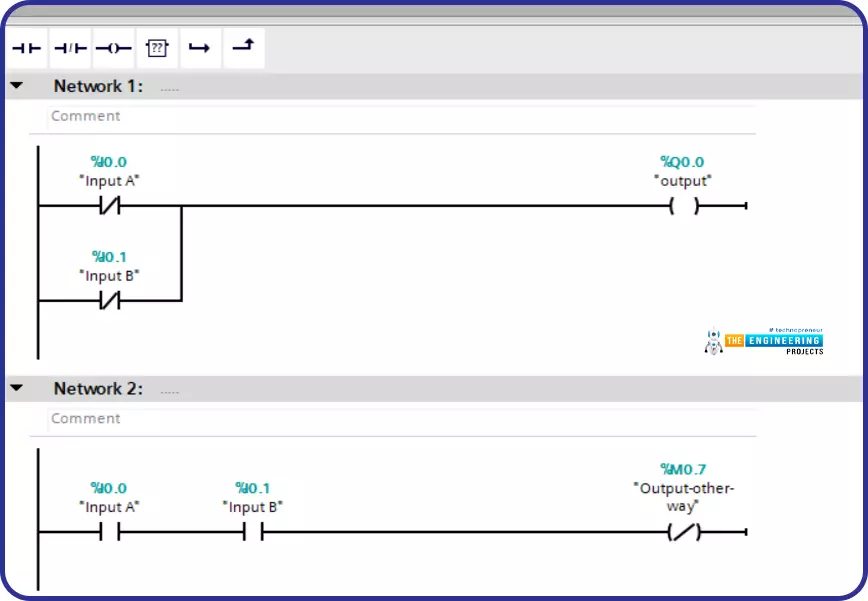
Hello friends! I hope you are all very well! I am so happy to meet you today to continue learning and practicing PLC ladder logic programming. In an earlier part, we already have gone through the very basic logic gates of “AND”. “OR”, and “NOT”. Today we are going to resume the simulation of logic gates. We have started and gone through simulating the basic logic gates which are “AND”, “OR”, and “NOT” as they are the most important basic logic gates by which we can form other logic gates. However, because the logic of large-scale projects is getting more and more complicating, a lot of time we have to use the other functions to do tasks faster. For example, we have shown in the logic gates article that, XOR can be used to compare two inputs and ch ...
Hello friends, I hope you are doing very well! In today's tutorial, we will set up a simulation environment for Ladder Logic Programming. It's our second tutorial in Ladder Logic Programming Series. In our previous tutorial, we have seen a detailed Introduction to Ladder Logic Programming and we have seen that this programming language is used for PLC controllers.
As PLC is an Industrial Controller, it comes with built-in relays/transistors(with protection circuitry) and thus is quite expensive as compared to microcontrollers/microprocessors i.e. Arduino, Raspberry Pi etc. Moreover, if you are working on a real PLC, you need to do some wiring in order to operate it. So, in order to avoid these PLC issues at the beginning, instead of buying a PLC o ...
In our previous articles, we grasp learn about examples, applications, and products of the internet of things. Now we try to understand how IoT has made our lives?
Thanks to the net, almost everybody – and everything – is connected.
Not solely is it easier and quicker than ever to speak with individuals and businesses everywhere on the planet, however, the net of Things (IoT) makes it potential for sensible devices to affix within the conversations, too.
IoT is quickly increasing, introducing new products all the time which will communicate with one another and transmit knowledge to support groups. ABI analysis estimates that IoT can grow to incorporate thirty billion connected devices by the year 2020. The application of IoT (Internet of things) i ...
Hello friends, How are you doing? Today, we have a very interesting topic of PLC ladder programming which is how to detect the transition between true and false and from low to high?. I know you are asking why do we need that? Well! Imagine my friends, we want to start a motor when the input signal state changes from high to low or from false to true. Let us give two examples to highlight the edge detection techniques. Good examples of using edge detection-based logic are timers and counters. In counters, they are energized to count up or down when a signal appears and the same for timers. Figure 1 shows the difference between using the edge to control a motor. In the top part, the motor is controlled by an input switch. the output is ON and OFF b ...
Hello readers, I hope you are all doing great. Welcome to the 2nd lecture of Section 5(ESP32 Sensors) in the ESP32 Programming Series. In the previous tutorial, we discussed the built-in ESP32 Hall Effect Sensor. In this tutorial, we will discuss another inbuilt sensor of the ESP32 i.e. Capacitive Touch Sensor.
ESP32 Board has 10 built-in capacitive touch pins, which generate an electrical signal when someone touches these pins. These ESP32 touch pins are normally used to wake up the board from deep sleep mode. These touch pins are also used to replace the normal mechanical buttons with touch pads, improving the presentation of the IoT projects.
Here's the video demonstration of the ESP32 Capacitive Touch Sensor:
Before going forward, let's first understand how this touch sens ...
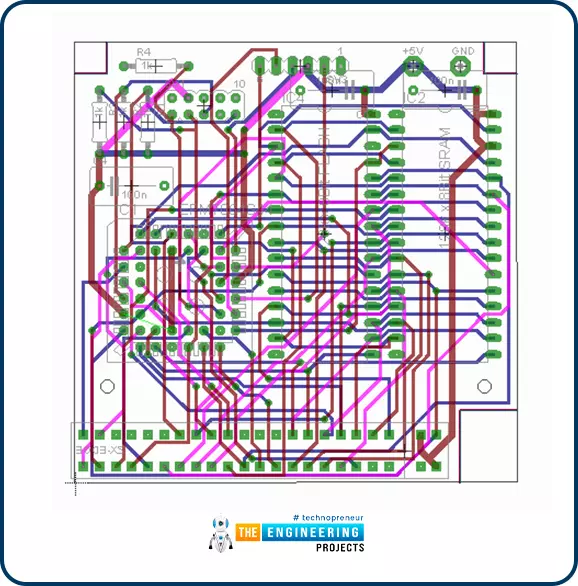
Hello everyone and welcome to this article which will be a great introduction to high-speed PCB design. For sure it is going to be a very interesting class. Let me start by posing a question; Is this something that you have ever come across in your world of PCB design? Where you spent too much time doing the schematics, selecting the right components, doing the footprint addition, generating the netlists, doing the proper layout and routing and sending the end product of your design to the manufacturer? At this level you might probably be designing standard types of PCB boards and if someone was to introduce a project that talks about signal integrity, reflections or even crosstalk, very much believe you will feel like a lost person. It might be s ...
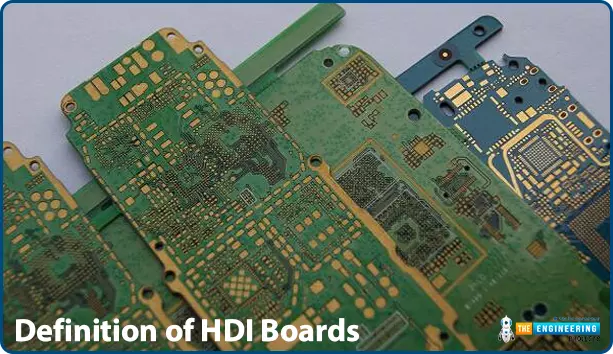
The printed circuit board is a type of plastic where electrical and electronic components lie, laminated and fixed. In modern days, there has been increasing in the complexity of electronic components and devices and this has also led to high demand for more complex PCBs that can make this achievable. This exclusive board that has been introduced in the market includes HDI, rigid-flex, Aluminium clad, buried and blind or even a blend of all the listed types.
There is a list of so many PCB types that a designer can choose for any type of electronic project ranging from single layer PCB to other complex types like the multilayered PCBs. In general, the simplest type of PCB contains copper tracks and interconnection between the elements and components on one side of the board. These types of ...
Hello readers, hope you all are doing great. In this tutorial, we are going to discuss a mechanism that allows users to update the ESP32 with a new program wirelessly or over the air (without using a USB cable to upload a new program).
Over-The-Air (OTA) programming
Fig. 1 ESP32 OTA
OTA programming is the mean by which a product manufacturer or product service provider can update the features or functionality of the device wirelessly or over the air, after the device has been deployed in the field where connecting a cable or uploading the code serially is difficult.
One key advantage of OTA is that a single central node can send an update to multiple ESPs on the same network.
The device must have a provisioning client capable of receivin ...
A Digital to Analog Converter(DAC) performs the task of converting digital words of n bits into voltages whose amplitude will be proportional to the value of the code expressed by the words themselves. Since the input binary words represent a succession of finite codes, the voltage coming out of a DAC cannot be continuous over time but is made up of as many levels as the converted codes are. This means that the devices to which the analog signal produced by a DAC is sent must filter it with a low-pass characteristic (integrating action). The operating criterion of a DAC is simple: in fact, it is sufficient to have a succession of as many voltages as there are convertible codes, obtained for example by means of a weighted resistance network (i.e. t ...