


Installation of Arduino driver in Windows


Hello friends! Today we will install or troubleshoot an Arduino USB driver in Windows. If you have followed our introduction to what Arduino is, this is the next practical step: making sure the computer can recognize your board before uploading a sketch.
Many boards work as soon as they are connected because Windows already has a suitable driver. Others need a board package or a driver for their USB interface. We will first identify which situation applies, then use Device Manager to inspect the connection and complete a small upload test.
The screenshots below come from the original Windows tutorial. They remain useful for understanding the manual installation sequence, but their dialog labels and Arduino software version are historical. Follow the corresponding controls in your Windows installation rather than searching for exactly the same screen layout.
What the Arduino Driver Actually Does
A USB driver allows Windows to communicate with a device through the USB connection. For many Arduino boards, the useful result is a serial port with a name such as COM4. Arduino software can open that port to communicate with a bootloader or running sketch.
The driver does not compile your sketch and does not decide which processor you are programming. Those jobs belong to the development tools and selected board configuration. A working COM port is therefore an important step, but it is not proof that every upload setting is correct.
We need to distinguish three things that beginners often call “the Arduino driver”: the Windows USB device driver, the Arduino board package, and the libraries used by a sketch. Installing a sensor library cannot repair a missing USB device, and repeatedly installing a USB driver cannot fix a missing compiler platform.
| Part | Purpose | Where you normally manage it |
|---|---|---|
| USB device driver | Let Windows communicate with the board's USB interface | Windows and Device Manager |
| Board package | Provide the compiler, board definitions and upload tools | Arduino Boards Manager |
| Sketch library | Provide code for a sensor, display or other function | Arduino Library Manager or the sketch library folder |
Identify Your Board Before Installing Anything
The classic Uno R3 uses an ATmega328P for the sketch and a separate USB interface. Other Arduino designs use a processor with native USB, while compatible boards may use a different USB-to-serial chip. The board's appearance alone does not identify the correct Windows driver.
Read the board name, revision and any visible USB-interface marking. If you bought a compatible board, consult its maker's documentation. A driver intended for one manufacturer's USB bridge is not a general driver for every board with an Arduino-style connector.
Use the official Arduino software download for the IDE. The original article mentioned version 1.6.3 because that was the version used for its screenshots. It is not a current installation recommendation.
On a managed work or school computer, driver installation may require administrator approval. Reading Device Manager and identifying the hardware can usually be done before that step. Give the administrator the board model and hardware identity instead of asking them to install an unidentified driver bundle.
Check the USB Connection First
- Disconnect external wiring from the board while establishing basic USB communication.
- Use a USB cable known to carry data, not only power.
- Connect directly to the computer for the first test.
- Allow Windows a short time to enumerate the device and complete any automatic setup.
- Open Device Manager and observe which entry appears or changes.
A power LED only shows that electrical power has reached part of the board. It does not prove that the cable contains usable data conductors, that the USB connector is sound, or that the USB interface is working. A board can light up through a charging-only cable and never appear as a USB device.
If no device changes when you connect and disconnect the board, try another known-good data cable and a direct USB port. These are more informative first checks than installing several unrelated drivers. Keep other USB devices connected normally so you can recognize the one entry associated with your board.
Arduino's Device Manager troubleshooting guide also separates connection checks, board-package installation and manual driver installation. Work through the applicable branch instead of assuming that a yellow warning always has the same cause.
Find the Board in Device Manager
Open Device Manager through Windows search or the system management menu. Expand Ports (COM & LPT), Other devices and the relevant USB device group as needed. The exact group depends on whether Windows has successfully identified the device and loaded its driver.
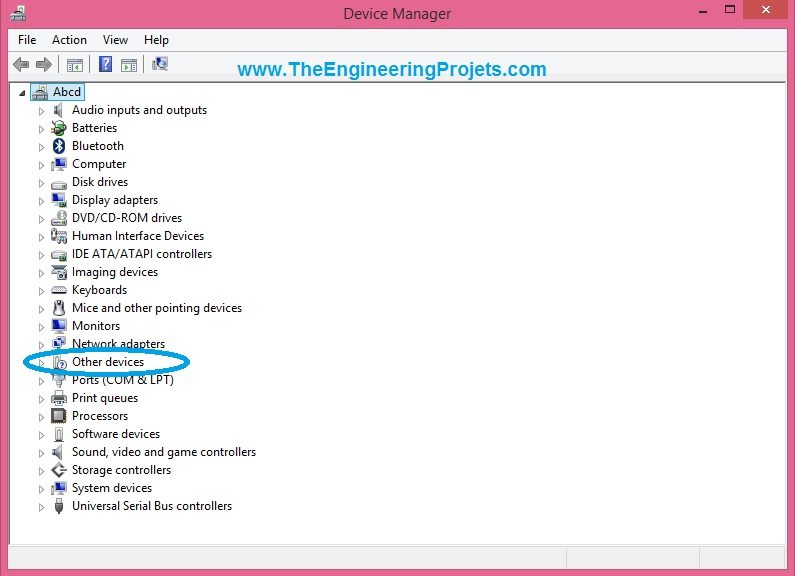
The historical screenshot shows an entry under Other devices. An Unknown device entry is not automatically an Arduino. Confirm its identity by disconnecting your board, observing the entry disappear, then reconnecting it and observing the entry return.
Open that device's Properties and read Device status. A warning icon is a prompt to inspect the reported problem, not a complete diagnosis. The details may indicate missing software, a device that cannot start, or a USB enumeration failure. Those situations require different next steps.
Use hardware IDs to choose the correct driver
In the Details tab, select Hardware Ids when that information is available. USB devices commonly identify a vendor and product using VID and PID values. Compare those identifiers with the board or USB-interface manufacturer's documentation.
Hardware identity is especially useful when a compatible board uses a USB bridge that differs from the official board. Download any required driver from that chip or board manufacturer's official support page. A random driver-download site is not a reliable way to identify the interface.
If Windows cannot read a device descriptor, a normal serial-driver package may not solve the problem because enumeration has failed earlier. Return to the cable, connector, port and board checks. Record the actual Device status message so you can distinguish this condition from a simple missing-driver case.
Install the Appropriate Arduino Board Package
Open Arduino IDE and use Boards Manager to install the package for the selected board family. For a classic Uno R3, select the package and board definition that actually target that AVR board. A similarly named newer board can have a different processor and toolchain.
Some board packages arrange additional device support during installation. Follow the official installation instructions for that board and accept only the relevant, identified software. After installation, reconnect the board if the instructions request it and inspect Device Manager again.
Do not install every available board package as a troubleshooting strategy. It adds unrelated tools and makes the selected configuration harder to understand. Establish one board, one cable and one known package before adding more hardware.
Manual Driver Installation for the Historical Workflow
The following sequence explains the original screenshots. It applies when you have identified the device and have an appropriate driver package available locally. Older Arduino IDE distributions included a drivers directory; do not assume that every current installation uses the same folder or packaging.
- Right-click the identified board entry in Device Manager.
- Select the option to update its driver.
- Choose the option to browse your computer for driver software.
- Select the folder containing the appropriate manufacturer's driver files.
- Continue and read the installation result.
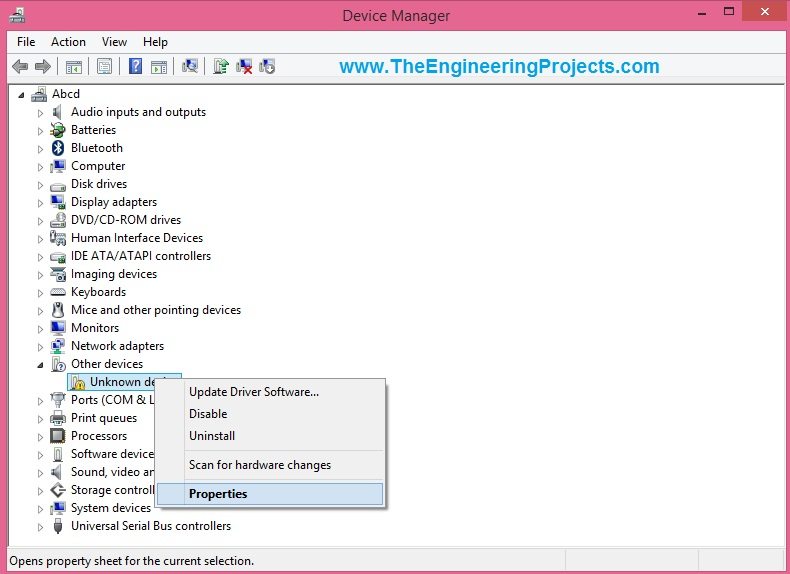
The Update Driver command operates on the selected device. Check the device name before proceeding, especially if several USB interfaces are attached. Updating a different device cannot create a working Arduino connection.
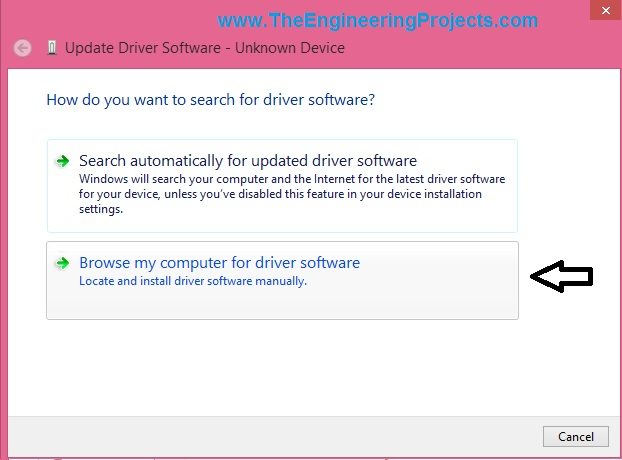
The browse option is useful when the correct files are already on the computer. If the package is distributed as a ZIP, extract it into a normal folder first. Selecting the ZIP itself is not the same as selecting the directory containing the driver information files.
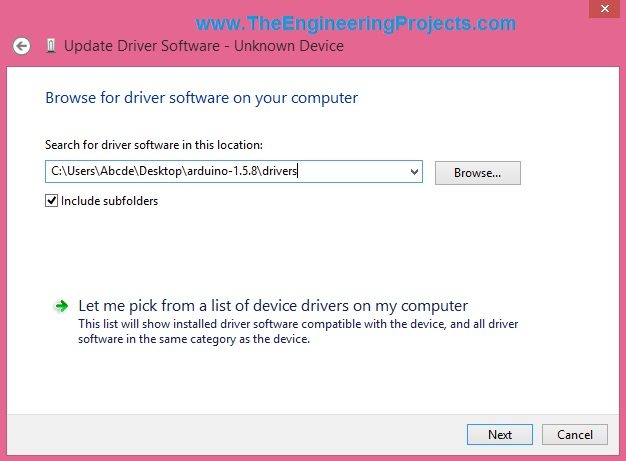
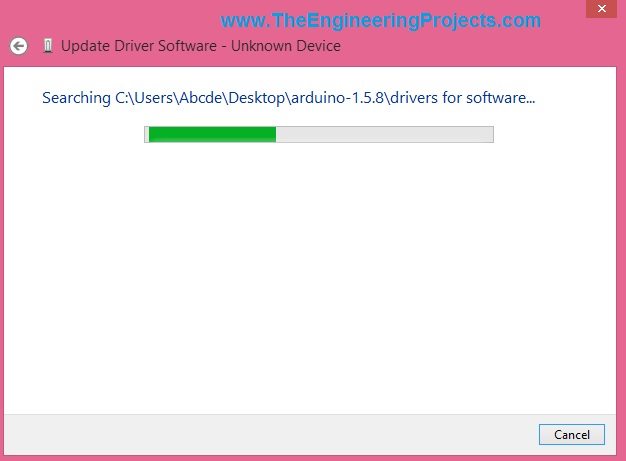
In this older example, the selected directory is the Arduino software's drivers folder. On your computer, use the location documented for your actual package. Do not copy a path from a screenshot if that path does not exist or belongs to a different software release.
Windows now attempts to match the driver files to the hardware. Read any publisher or installation message carefully. If the package does not match, forcing an unrelated driver is unlikely to fix the board. Verify the hardware identity and package instead of disabling system driver protections.
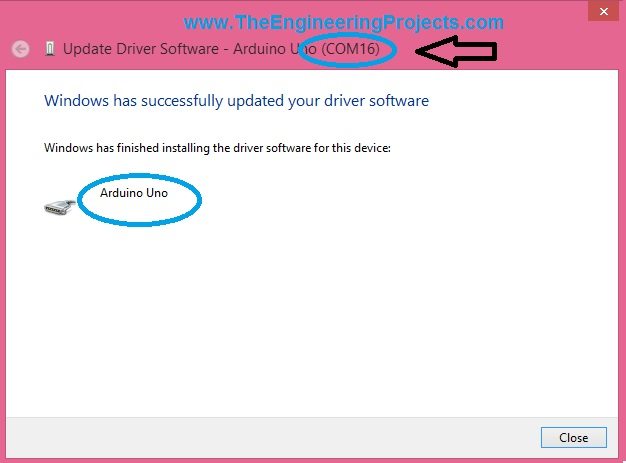
A completed installation should be followed by another look at Device status. The original success dialog reports COM16. That is the port assigned on the original computer, not a port number that your board is required to use.
Confirm the COM Port and Select It in Arduino IDE
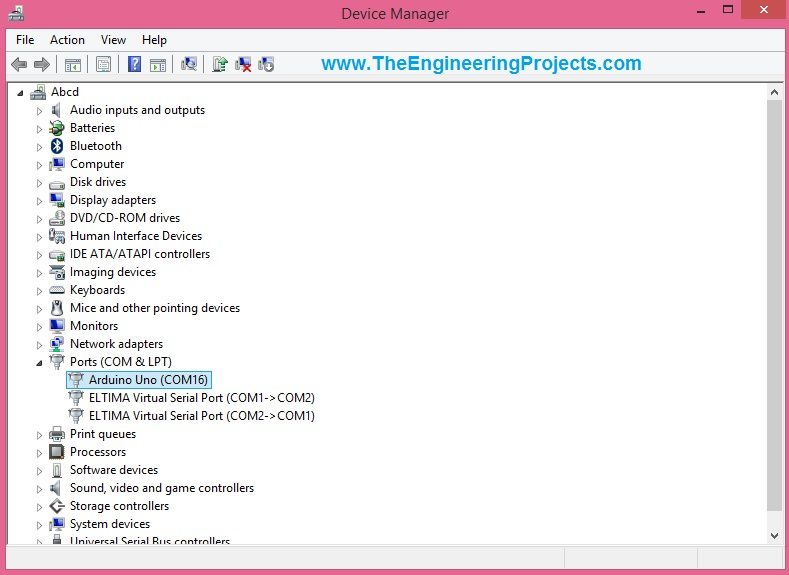
When the board is represented as a serial device, Device Manager should show its assigned COM port. Note that value and select the corresponding port in Arduino IDE. Also select the exact board model; the port and board selections serve different purposes.
COM numbers can change when devices, USB interfaces or operating modes change. A high number such as COM16 is not inherently an error. There is no need to force the board onto COM1 merely because an older tutorial used that number.
If the IDE lists several ports, disconnect the board and note which disappears, then reconnect it and select the returning port. Bluetooth serial ports and other USB adapters may remain in the list. Their presence does not mean that the Arduino has been detected.
Boards with native USB can enumerate differently between their bootloader and application. Follow that board's documented recovery procedure if a sketch affects USB communication. Do not apply a reset sequence intended for another processor simply because both boards are called Arduino.
Perform a Small Upload Test
Open the built-in Blink example or another official example appropriate for your board. For the classic Uno, Blink provides a simple first upload without additional wiring. Compile it first, then upload with the confirmed board and port selected.
| Observation | What it tells us |
|---|---|
| Compilation succeeds | The selected build tools can compile this sketch |
| A COM port appears | Windows has exposed a serial interface |
| The uploader communicates | The chosen upload path reaches the board's programming interface |
| Blink runs | The uploaded sketch executes with the expected board setup |
Compilation alone does not test USB communication because a sketch can compile with the board unplugged. Conversely, a working serial port does not guarantee that the bootloader is responding or that the processor selection is correct.
If uploading reports that the port is busy, close other serial terminals and any application that may have opened it. Check that a second IDE window is not using the same board. Reinstalling a driver is not the first remedy for a port already held open by another program.
Troubleshooting by the Failed Stage
| Problem | Start here |
|---|---|
| Power LED on but no USB entry | Data cable, direct port, connector and USB-interface condition |
| Unknown device or warning icon | Device status, hardware IDs and the correct driver source |
| COM port present but missing in IDE | Reconnect, refresh the IDE's selection and confirm the device remains connected |
| Port cannot be opened | Selected port, another application holding it and access restrictions |
| Upload opens the port but gets no response | Exact board/processor selection, reset behavior and programming interface |
| Repeated disconnects | Cable stability, connector movement, hubs and external circuit loading |
Change one condition at a time and note the result. For example, record the COM port before changing the cable, then check whether the same device reappears. This produces a useful diagnosis instead of a series of installations with no clear relationship to the fault.
If the board works on another computer, compare the first computer's device status and software configuration. If it fails to enumerate with several known-good cables and computers, investigate the board itself. Neither observation proves the entire cause, but both narrow the next check.
Review Before Moving to Your First Project
You should now be able to identify the board's Windows entry, explain which USB interface it uses, select its actual COM port and upload a small example. These are separate checks, and keeping them separate makes future troubleshooting much faster.
Record the board name, selected package and successful test sketch. Reconnect external components only after the basic upload works. If communication stops after adding a circuit, compare the wiring and power requirements before changing a driver that was already functioning.
Our Arduino projects guide provides the next exercises. Begin with a small input or output project so that a hardware wiring error does not become confused with the computer connection you have just established.
Frequently Asked Questions
Does every Arduino require a manually installed driver?
No. Windows may already provide suitable support. Inspect the actual device and follow the board's official setup instructions before installing anything extra.
Should my board appear as COM16?
No. COM16 belongs to the historical example. Select the port assigned to your board on your computer.
Why is the power LED on when no port appears?
Power and USB data are different connections. A charging-only or damaged cable can power the board without allowing enumeration.
Can I use the same driver for every compatible board?
No. Compatible boards can use different USB interfaces. Identify the interface and obtain any required driver from its manufacturer.
Does a successful driver installation prove that uploading will work?
No. The board package, selected processor, port, bootloader and electrical condition still matter. Confirm the complete path with a small upload test.

Comments
0